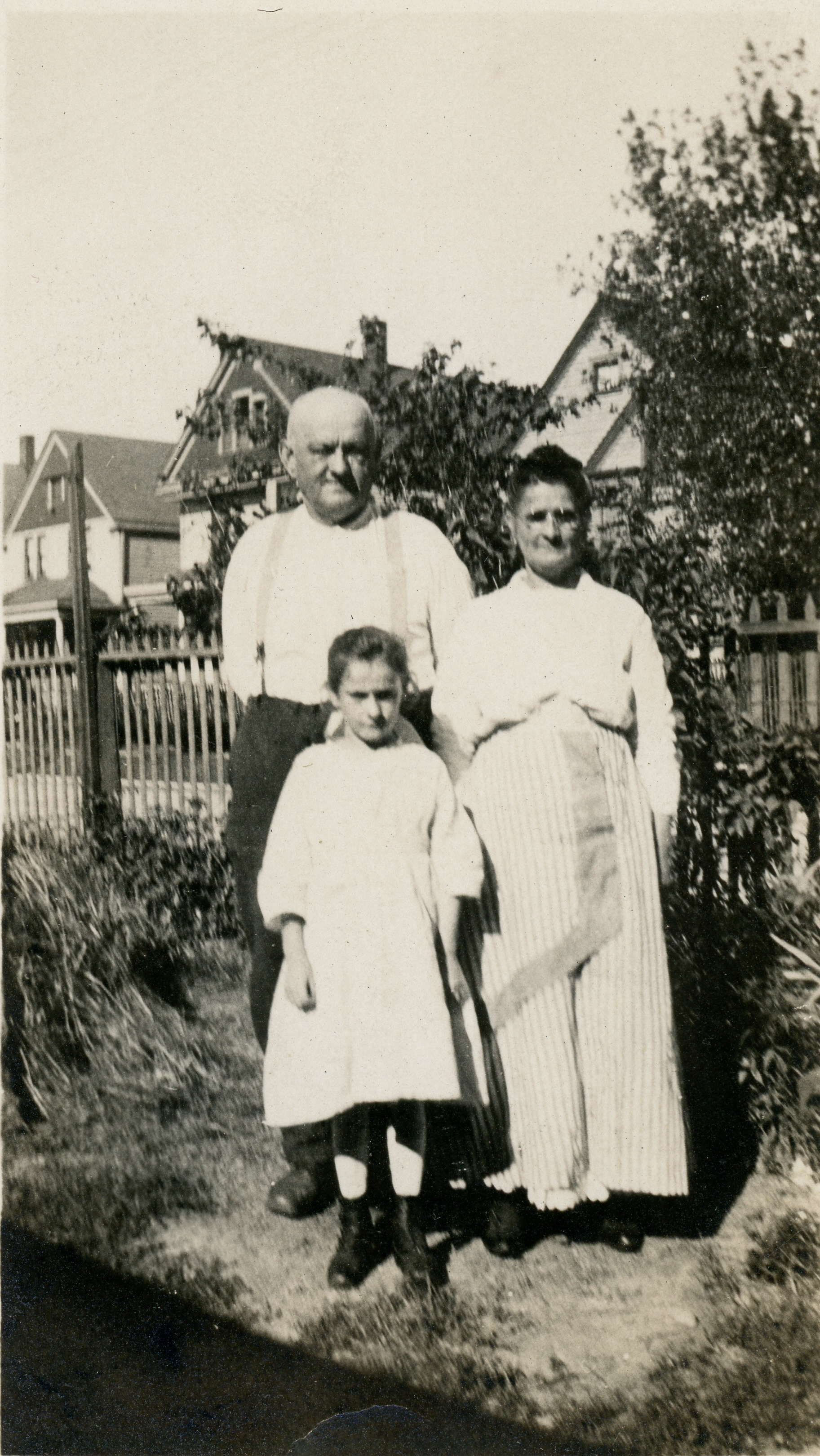
I'm pretty sure that's my great grandparents Franz and Mary, with their daughter Catherine.
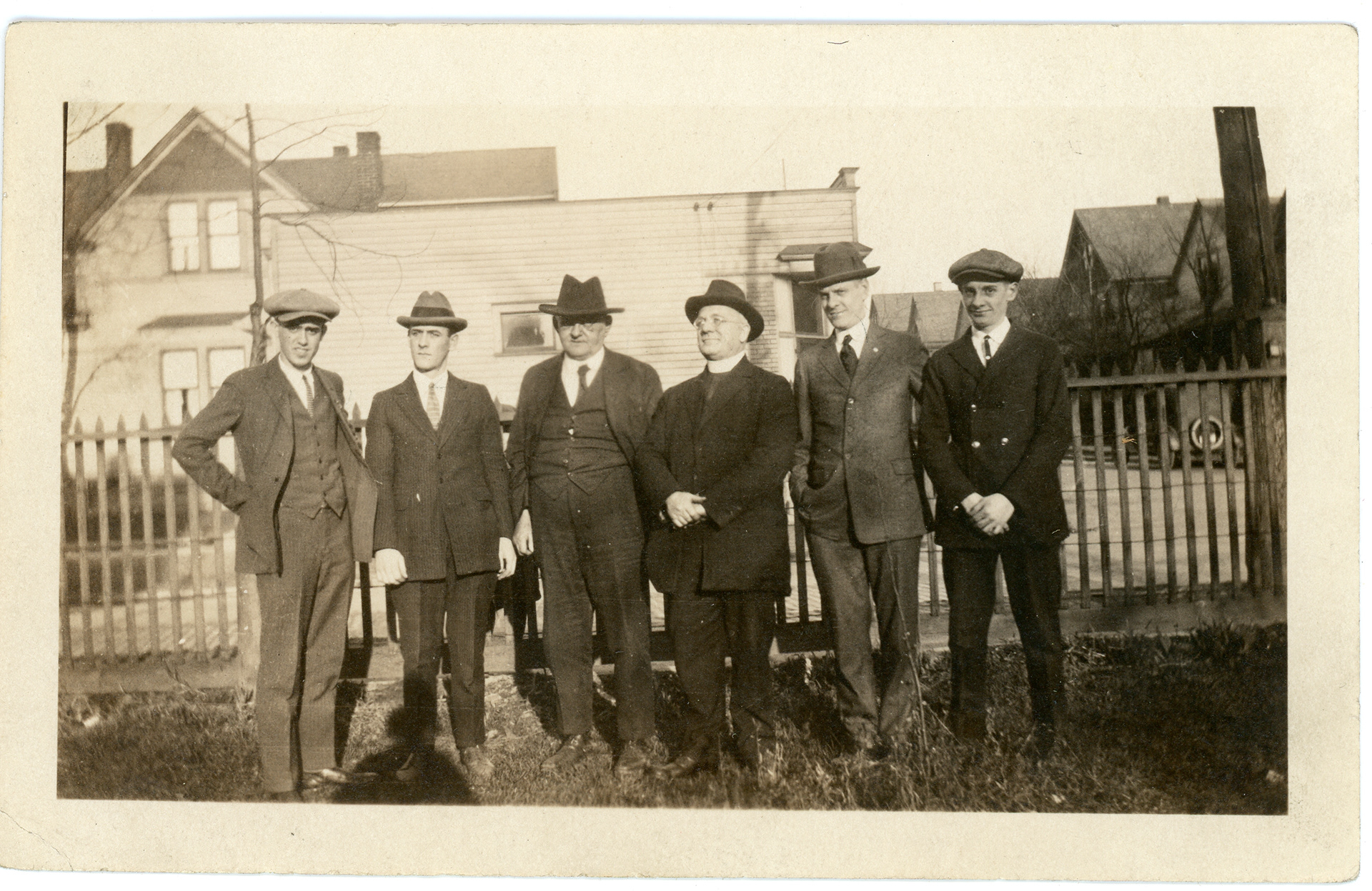
Do you think the portly fellow in the middle looks like Franz?
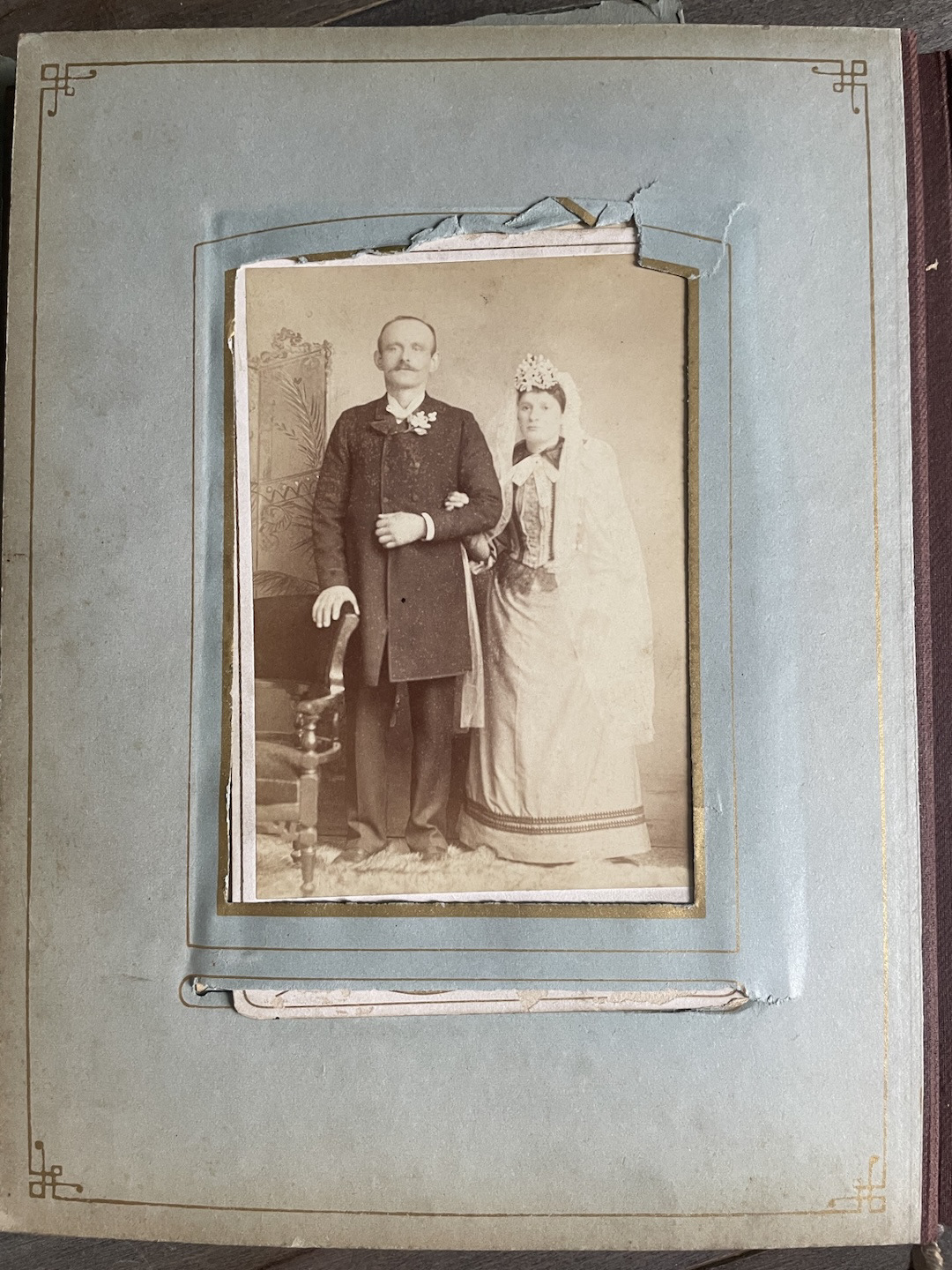
Franz Gohring and Mary Wald
At first, I heard nothing but bad things about my great grandfather, Franz. He’s the recipient of all of the German letters and his son Stephen is my grandpa, who fought in World War I. My uncle tells me he remembers hearing that Franz was a hard man, not shy about getting into physical fights with people. I also have an old email that my aunt sent to my parents where she says that she didn’t see Franz often when growing up and remembers visiting him once and being not exactly afraid of him but thinking he was always in a bad mood.
I also have a couple of curious letters from my grandfather’s siblings, sent to him while he was away at war. In one of them, his sister Francis who has already moved out of the house and is living on her own, sounds furious with Franz, their father. “It made me so angry to think they want your money at home… I think dad will never change. I hope when you get back again that you won’t go home there without him explaining that he will do better or make a little more room.” She also says that she told their mother that she’s not coming home any more because she can’t invite any company over there.
She must be referring to the $30 that my grandfather sent home from France at some point. There’s an annoying amount of ink spent between my grandpa and his family in late 1918 and early 1919 trying to track down the money. Between all of the discussion in the many letters and the fact that they asked him for money while he's overseas fighting in a world war suggests it was a pretty important sum for the family. Once, when my grandfather writes to Franz about supposing that one of his brothers will get drafted soon, he says that if so, things will surely become “uncomfortable” at home. I think he was referring to the family's loss of his brother’s income, should he get sent away to war.
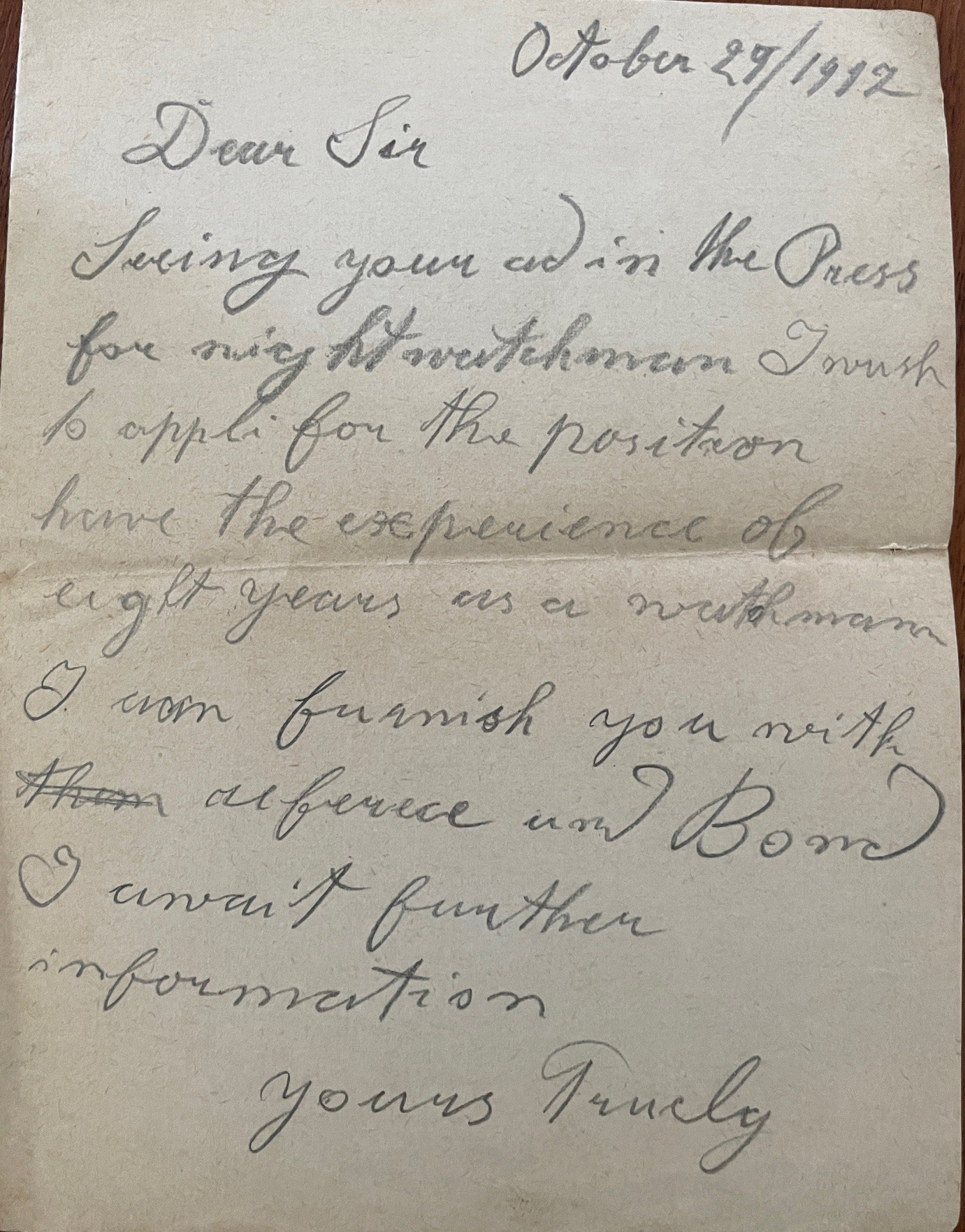
Franz must have been scrambling a bit to make ends meet. I notice that on some of the census records, there’s a column listing how many weeks over the past year the person didn’t work, and for Franz sometimes that number is in the 20s, suggesting work is hard to come by. For a couple of decades his job is listed as a “moulder” at a foundry but he might have additionally worked nights as essentially a guard. We have an unsigned letter from 1912 inquiring about a job as a night watchman that I suspect is a draft written by Franz, and it says he has eight years experience. In the 1920 census, when he's 60, Franz's occupation is listed as a watchman at a "gear shop."
I have my suspicions that Franz and his wife, Mary Wald, may have split up late in life. In 1930 when she's 59 and he's 70, he's living alone on Elwell and she's living with some of her adult kids on Barrington, the old house that I grew up in. After that, she lives with a woman for whom she works as a housekeeper. My cousin tells me that my aunt said that Mary wasn't easy to get along with either and that ultimately she got pushed out of the family home on Barrington in favor of my great grandmother on the other side, Catherine Gorg, who everyone basically adored.
Family lore plus some of the additional breadcrumbs paints a picture in my imagination of Franz as a not-so-great-guy. But I’m learning a lot more recently in the letters that’s making me change my opinion of him.
First, a quick history lesson. Between 1920 and 1923 there was a period of hyperinflation in Germany. The Treaty of Versailles, signed after WWI, required Germany to pay enormous sums of money and goods to the winning countries. Practically everything that was made in Germany was shipped away, and imports were restricted, leaving the people of Germany unable to obtain much of anything. The government started printing money with nothing to back it up, driving inflation to crazy levels.
The impact on regular people is painted clearly in the family letters to Franz. Rosa shares the ballooning cost of goods: in 1920, a pair of shoes costs 300 marks (before WWI, the exchange rate was 4 marks to US$1). In one letter, Franz’s brother Heinrich thanks him for sending 20,000 marks and mentions that a cow costs 2-3 million marks. Rosa says she’d like to mend their clothes but there’s no thread available. In November 1920, Rosa says they haven’t eaten meat all year and that the pigs they have won’t yield much meat, presumably because the family can barely feed them. They are farmers and it seems the crops keep doing poorly and then, a lot gets stolen, she says.
At the time of the final letter that I have, dated November 1923, the exchange rate is 4 trillion marks to US$1. That’s right, trillion. There are lots of photographs online of old paper currency in 20 million and even billion denominations. One mark notes were so worthless that there are lots of iconic photographs showing people using them for wallpaper or children playing with stacks of notes like they're blocks (you can check out some images here). It’s an impossible situation for essentially everyone in Germany.
Throughout these years, not only does Franz send his family money, he sends them boxes of goods: food, clothing and shoes. Rosa writes of receiving a box from Franz in August 1920 and immediately making a little feast. That’s only the first box referenced in the letters, there are others over the coming years. In the very last letter that I have, Franz’s nieces thank him for sending dresses. He also sends money and Rosa frequently offers him tips on the best way to do so – better to send U.S. dollars so that they can change them for that day’s best rate.
That’s not all Franz does. He invites them to come to the U.S. and ultimately pays the way for his nephew, Franz. He manages to get the younger Franz to the U.S. in 1923 – pretty much the height of that insane inflation, when obviously no one in Germany could buy a ship ticket or anything really. The logistics play out over several years, as he tries to help the younger Franz obtain permission to come to the U.S., and then figure out how to send money that Franz can use to buy local transportation to Hamburg. At one point, the elder Franz is apparently also trying to help a niece, on his wife’s side of the family, to join the younger Franz on his trip over, and there are discussions about Rosa and their mother heading over.
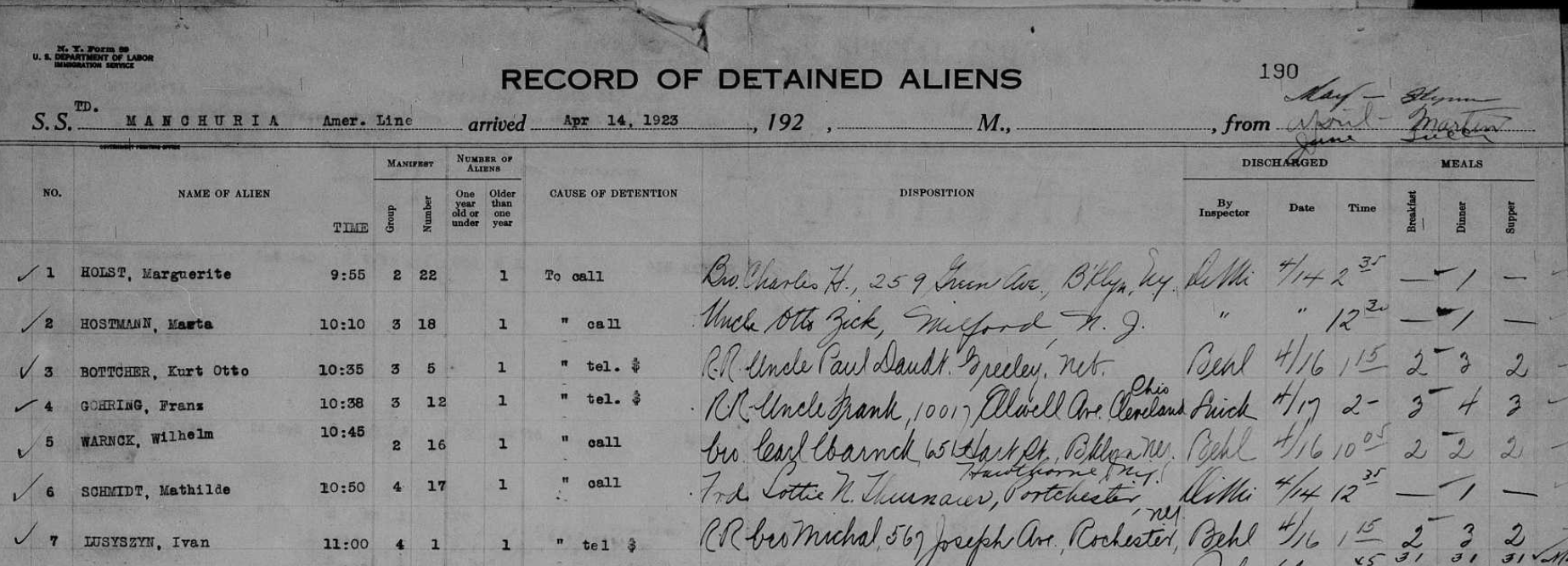
Record of the young Franz being held upon arrival in New York, and reference to his uncle in Cleveland.
I think the younger Franz made the journey with literally no money in his pockets. Along with the passenger list from the ship he arrived on, I’ve found a “Record of Detained Aliens” that I believe suggests that the authorities telephoned his uncle for the money to send the younger Franz from New York on to his uncle in Cleveland. I have much more to say about the younger Franz’s story and the work required to get him out of Germany during this period in history but suffice to say that his uncle appears to have worked hard to help, while sending lots of stuff for years to try to support his suffering family.
I've also been thinking about the fact that we actually have these letters today. The oldest is 133 years old. Franz must have treasured them, keeping them safe in his house on Elwell until his death, or at some point handing them off to one of his sons who stored them away in the old family house on Barrington. Maybe he wasn’t such a bad guy after all.
*******************************************
In other news, I was recently interviewed for a podcast done by a professional genealogist! She expects to post it in September and I'll be sure to share the link once it's available. I also recently joined a writing group and have been working on an essay that I'd like to submit for publication somewhere. I'll let you know if I'm successful.
I haven’t written anything here for a while because I’ve been busy digging into a few people and I’d like to figure out a few things before writing more about them. I bit the bullet and hired a guy who happens to live in my neighborhood who translates this old German writing for a living – I’ve sent him four letters that tell an alarming story that I’ll share with you all once I feel confident about the translation.
There’s still so much left to do! I haven’t even finished doing our “poor man’s” translation of the letters. There are a couple of dead ends in terms of whether or not some folks in my tree got married and had kids that I’d like to dig deeper into. And of course I still have lots more to share about what happens next to my grandfather on the front lines! Rest assured that there’s a lot going on on my end, I just need to solve a couple of mysteries before sharing it all.
Sign up for updates. Share this post on the socials