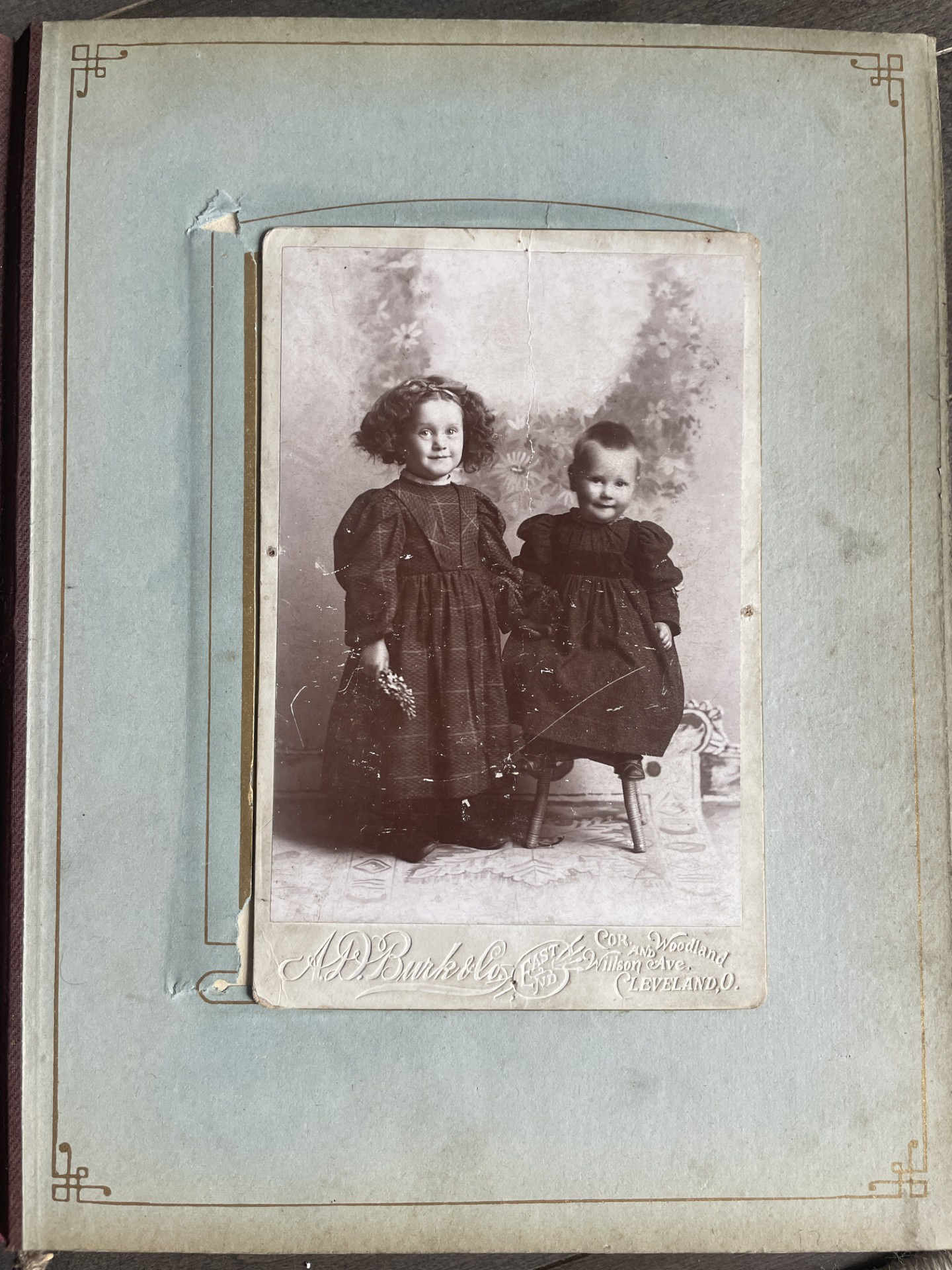
Frances and my grandpa, Stephen
I’ve been itching to tell more of the story of the Germans and intended to write about how difficult life appears to be for them back home, a book end of sorts after my last post about the comparatively fine life back in Cleveland while my grandfather is away at the war. In order to write this post, I’ve spent a bunch of time looking closely at our poor man’s transcription and translation job of some of the German letters. We have been using a combination of Transkribus, a site that uses machine learning to transcribe the Old German script that the letters are written in, plus Bing Translate to then translate the German to English. I do have some interesting insights to share here but as reluctant as I am to do it, I’m otherwise going to hit the pause button for a bit on writing more about the German letters for a reason I explain below.
First though, the interesting bits. I’m finding that just like with my grandfather’s letters, the German letters reference major historical events. But they have been also really valuable in confirming the scant breadcrumbs we’ve been able to uncover so far of my German relatives’ lives. Conversely, the confirmation of official records adds some nuance to the stories we’re uncovering in the letters.
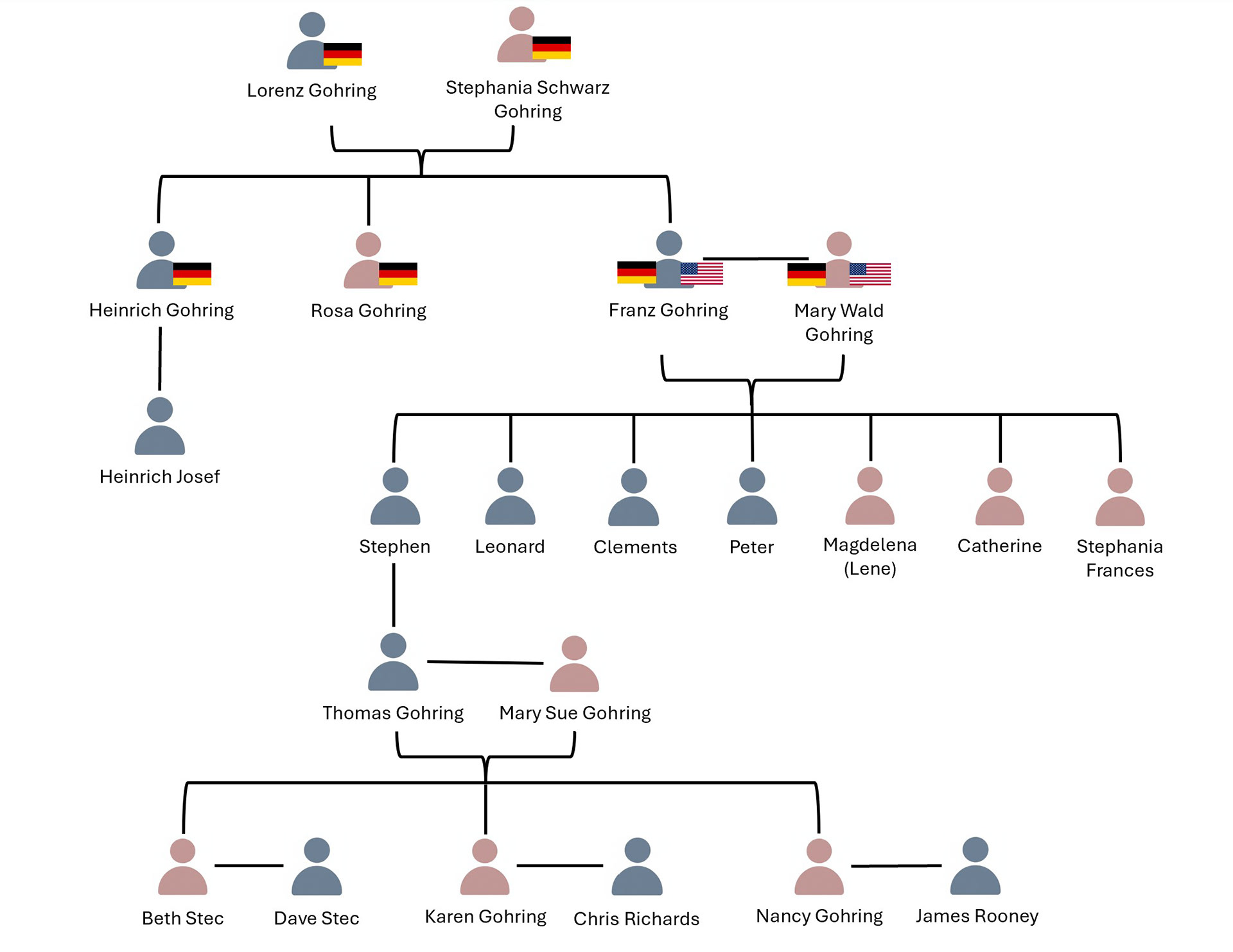
Here’s an example of how the letters are helping us piece together the genealogy of this family. First, a reminder of who is who: My grandfather, Stephen, fought in WWI for the Americans. Franz is his dad, the guy who immigrated to Cleveland and the recipient of all the German letters. Heinrich is my grandfather's uncle and Franz’s brother who fought for the Germans and got captured by the French and sent to a POW camp in Algeria. (The family tree with the current cast of characters is here, for your reference.)
The records that we (and by we, I predominantly mean my cousin), have dug up on Ancestry indicate that Franz and Heinrich were born 21 years apart. That’s a lot! Not impossible of course, but I’ve had moments of worry that maybe we’ve been looking at records for someone unrelated because there have been many, many Heinrich Gohrings over the years. However, an 1898 letter to Franz from Heinrich’s dad, Lorenz, closes with this line: “Special greetings from Heinrich. He is 17 years old and just as tall as you.” The records we have about Heinrich, including the Red Cross files that indicate his movements through the POW camps and that line up with his sister’s letters, show his birthday as Oct. 21, 1881, which would make him 17 in 1898 when Lorenz sent this letter. That seems to add confirmation that we have the right Heinrich.
Another thing that occurred to me when considering Heinrich’s birthdate: he was born in October 1881 and his brother Franz arrived in America in July 1882. Franz hardly knows Heinrich! He was only around eight months old when Franz immigrated to the U.S. I’m thinking about all the letters that Rosa writes to Franz, frantic for news of Heinrich’s wellbeing, and also Heinrich’s letters to Franz from the POW camps. To Franz, this is a brother 21 years his junior who I don’t think he’s seen since he was eight months old.
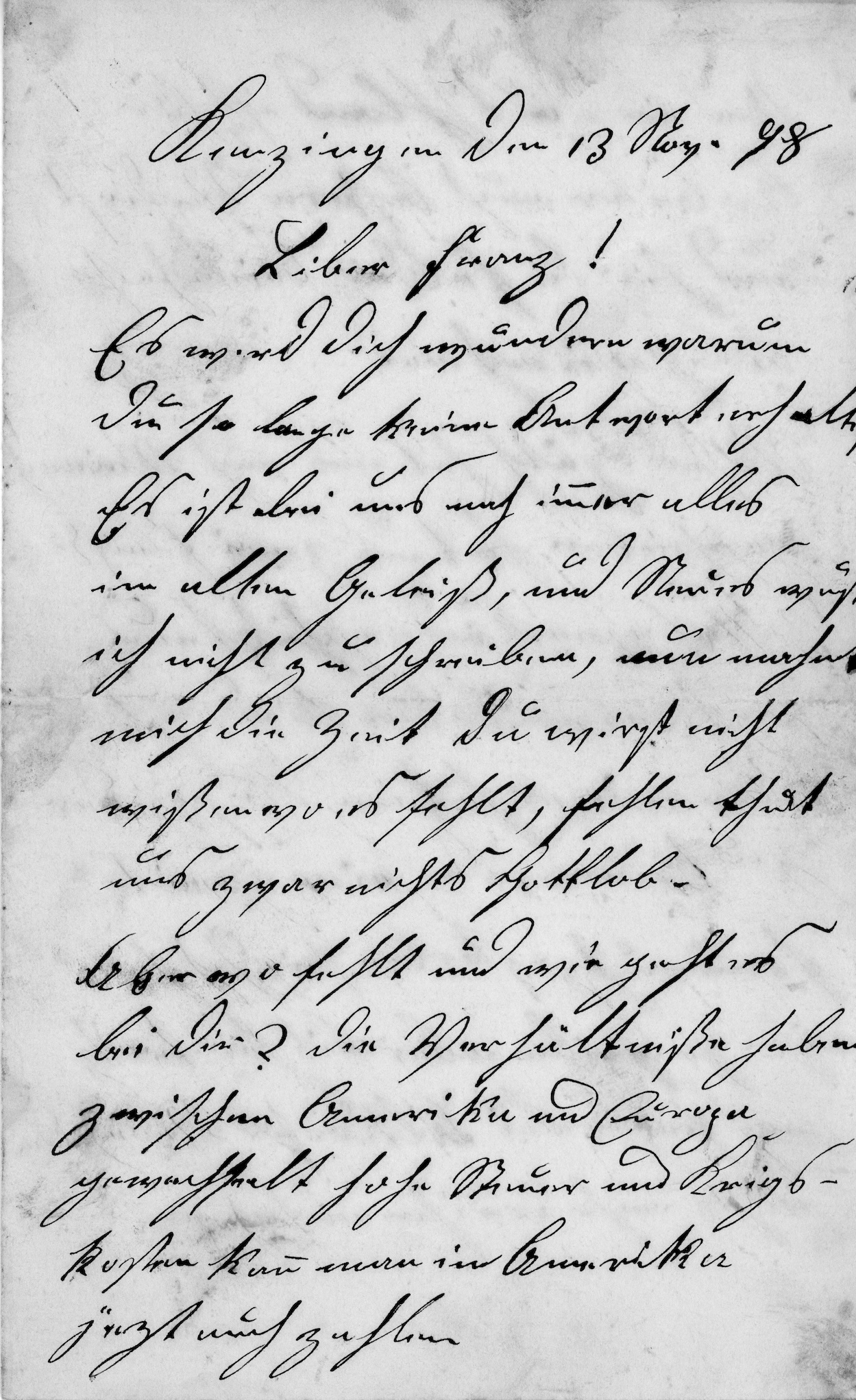
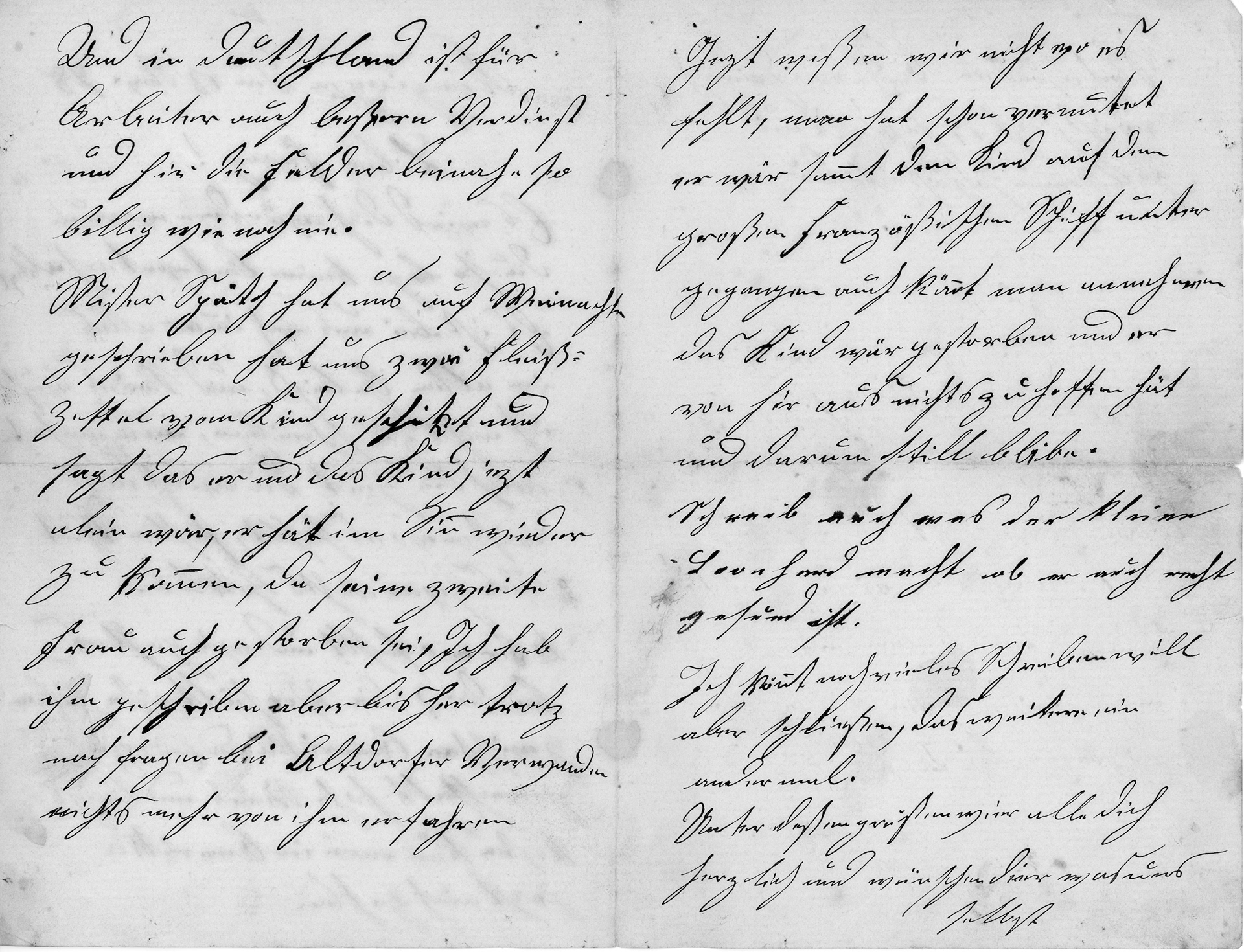
This is the letter from Lorenz that mentions Mr. Spath
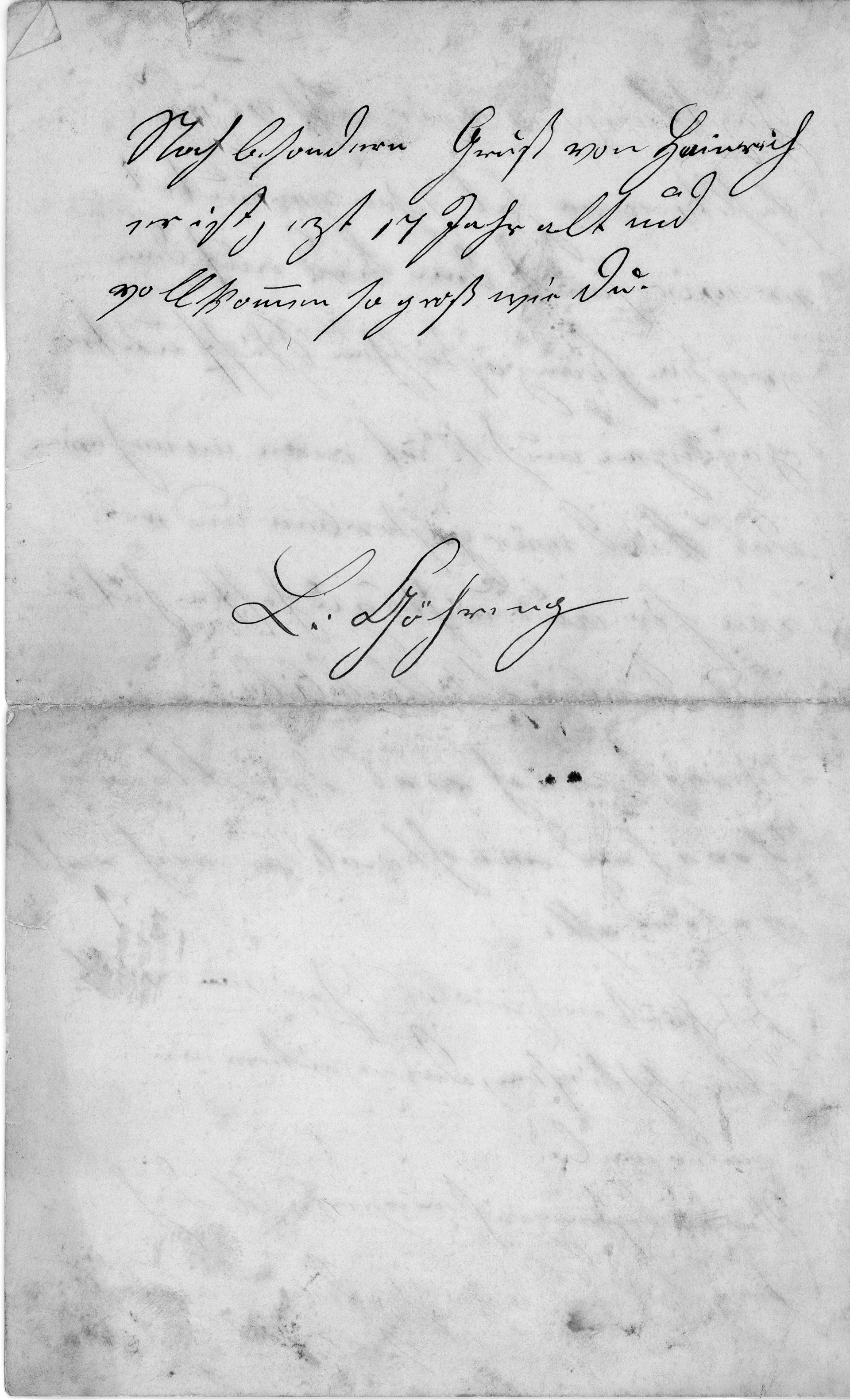
And the closing line about Heinrich at age 17
The same November 1898 letter from Lorenz to Franz also seems to reference a major international news event. Lorenz writes about a Mr. Späth who planned to return with his child (from where, I don't think he says) because his second wife had also died. Lorenz says that he wrote back to Mr. Späth and wondered why he wasn’t hearing more from him. “One had already suspected he went down with the child on the big French ship,” Lorenz wrote. The translation I’m going from is confusing so I can’t tell if that’s indeed what happened or if Lorenz wasn’t quite sure yet. I've included the letter here if any Kurrent readers want to chime in!
It’s possible that the French ship he references is the SS La Bourgogne, which sunk off the coast of Nova Scotia in July 1898, killing in the ballpark of 600 people. It’s an appalling story which most of us probably haven't heard of perhaps because it was eclipsed by the Titanic sinking in 1912, when more like 1,500 people died. Apparently SS La Bourgogne crew behaved shockingly badly, fighting off passengers so that they could get in the lifeboats themselves. I’ve seen the incident described online as “women and children last” because only one woman and no children survived – around 200 women went down with the ship. I’ve tried to find a passenger list for the ship to confirm whether someone named Späth was on the boat but surprisingly, there doesn’t appear to be a complete list. I’ve found newspaper clippings that list passengers but in fact those lists only include the relatively small number of first class passengers, because apparently the rest of the dead weren’t worth mentioning (no Späths that I could see on that first class list). I’ll keep trying but hey, in the meantime at the very least we all got to learn about an intriguing historical event that most of us had probably never heard of!
Here’s another very cool connection uncovered in the early German letters. In an 1894 letter to Franz, Lorenz references a newborn baby of Franz’s who seems in bad shape. A reminder that we only have letters that Franz saved, so here Lorenz appears to be referring to something that Franz wrote to him in a letter that we don’t have. In the next letter though, Lorenz again references Franz’s child who apparently didn’t die after all. Judging from the dates of the letters, the child must be Frances, my grandfather’s sister who sent him her glamour shots when he was in the war and who is pictured above as just a girl with my grandfather. What a cool connection, to realize this old letter written in a cryptic, obsolete German script, references the young lady who 23 years later writes letters that we also have, describing her life in Cleveland where she supports herself and lives on her own.
The odds of having these two letters in our hands is really pretty mindblowing. The German letter is 130 years old. How remarkable that it survived this long! Frances’s letters, which are more like 108 years old, not only somehow made it into my grandfather’s hands in the trenches in France – a pretty insane prospect in and of itself – but then made it home with my grandfather, despite his sortees over the top and on night raids. Both letters sat in boxes for all these decades, first in the attic of the house my grandfather and father lived in and then in my parents’ attic. They somehow didn’t get eaten by mice or damaged by water or thrown away. Pretty crazy when you take a second to think about it.
There’s potentially a lot of drama in additional German letters but here’s where I’m feeling like I have to figure out how to get better translations before I share more with you. As a former journalist, I’m getting twitchy writing with such little confidence in my source material (in the letters I reference in this post I was able to make out some of the text in order to feel somewhat ok about writing about them here). I suspect I’m missing some interesting nuance due to the poor translations but more importantly I worry some of the translations may be way off. One letter describes Heinrich’s wife as so “quarrelsome” that she threw a can of petrol at Heinrich’s and Rosa’s mother! Before I accept that as accurate, I’d like a real, professional human to confirm it. That said, our machine translation of the later letters seem to indicate that there’s an unfortunate and potentially disturbing level of violence in this family so it’s possible that incident really did happen. I’m doing some more investigation into translation options now and will spend some time thinking about next steps (recommendations and ideas are welcome!).
Meanwhile, please also check out my next post that includes photos of all the German folks we're mentioning. I find it pretty cool to put names to faces.
Sign up for updates. Share this post on socials.