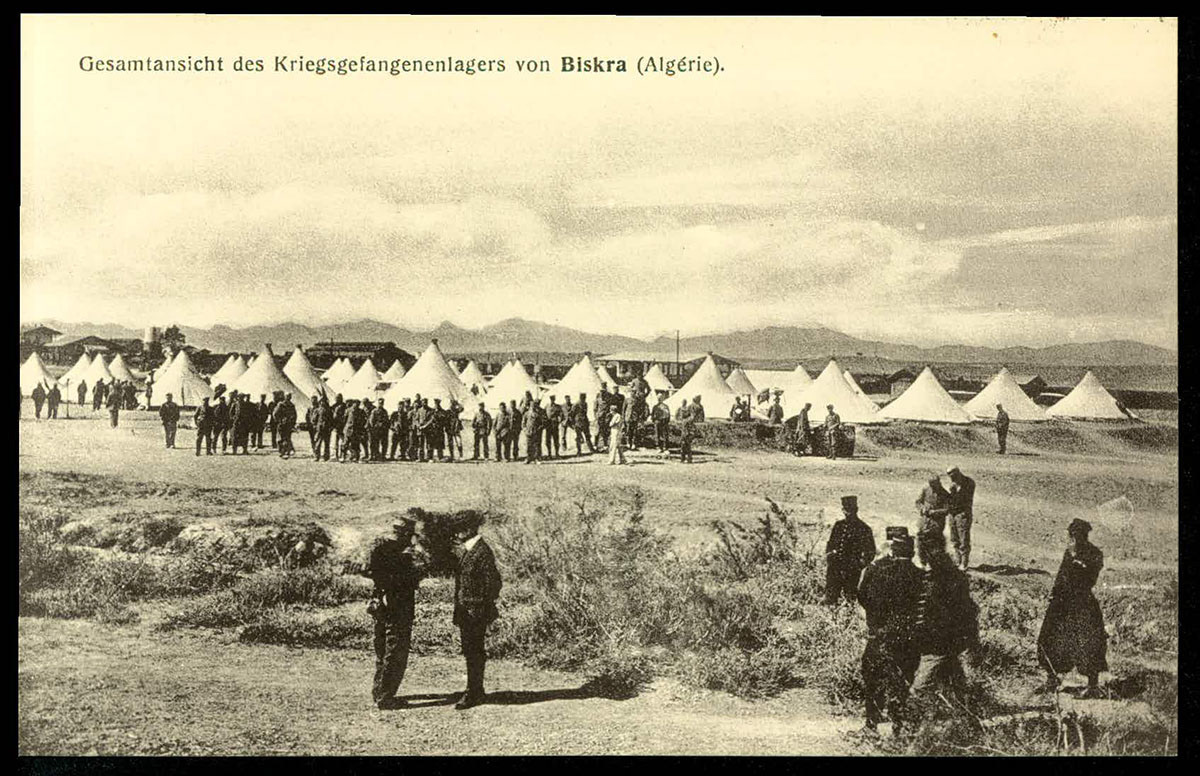
A postcard of Biskra, available on the ICRC website
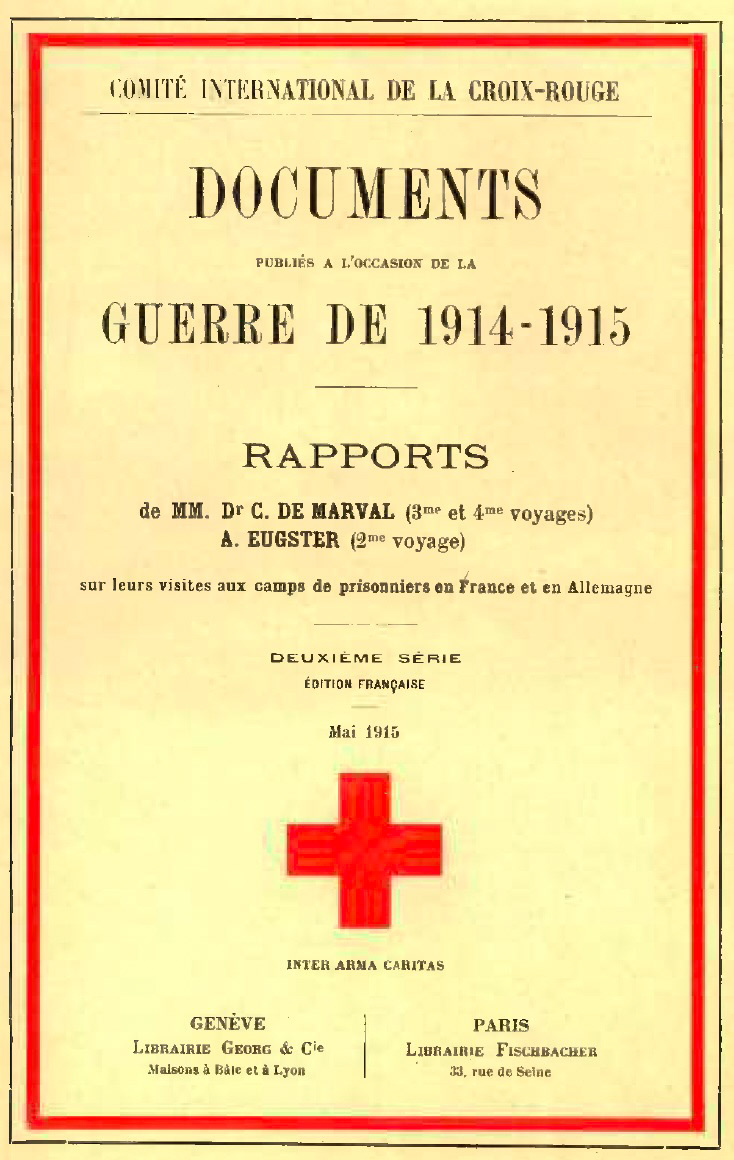
Front page of the report
There’s surprisingly little information freely available online about life in the Algerian camps. I currently have two perspectives – a very long report written by representatives of the International Committee for the Red Cross who visited the POW camps in Algeria in 1915 and the letters, including Rosa’s to Franz relaying what she hears from Heinrich and also a handful of letters from Heinrich to Franz. These two sources of information paint very, very different pictures.
The ICRC report is long and written in French and German. I used Perplexity to translate portions of the report and found the language strangely chipper and seeming to gloss over the (presumably) harsh reality of a POW camp. It describes the work the prisoners are required to do as “light and easy” and that prisoners nearly all get diarrhea but it's not a big deal because it usually only lasts two weeks.
I find this bit particularly hard to believe: “In summary I can say that the prisoners in Algeria and Tunisia are not particularly to be pitied… and that they do not complain. Very well treated overall, they have an easy life in a marvelous country and in a healthy climate. Some of them – the philosophers – even admitted to me that, amid their material and moral miseries as prisoners of war, they at least had this consolation ‘of having seen some country, and an interesting country at that!’” Come on! They weren’t on vacation.
The report also puts a glossy shine on and seems to excuse something that plagues Heinrich, Rosa and Franz:
“This is the place to point out a regrettable fact for which a remedy should be found if possible. It has often happened that, in the depots in France, many prisoners collected their German pocket‑money in order to have it changed. This exchange has sometimes not been able to be carried out quickly, so that too often groups of prisoners have been sent elsewhere (either in France itself or to African depots) before the money handed in had come back into the paymaster’s hands. As a result, the sums handed in could not be returned, and often even the money after exchange could not be forwarded. I saw a camp commandant in France who said to me: ‘Here: I have more than 3,000 francs, equivalent to what was handed to me in marks. Where are the three or four hundred men to whom this money belongs? I do not know. Scattered to all corners! I do not know where to send this money, and here I am obliged to keep it on deposit.’… If I have not pointed out this fact earlier, it is because it was only in Africa that I had the opportunity of hearing serious complaints on this subject, from prisoners who had collectively handed over large sums two, three and even four months previously, and who now were distressed not to have money that could have been useful to them.”
I really doubt it was administrative oversight that kept money from reaching the prisoner recipients. Eventually, Rosa and Franz are convinced that Heinrich is indeed alive and the letters they receive are coming from him, even if someone else wrote some of them. They repeatedly send him money and packages, much of which Heinrich doesn’t appear to receive or in some cases, he receives only partial amounts of the money that they send. I’m not exactly sure why the money is so important – the prisoners are clearly fed but perhaps not well, and perhaps money helps buy more. But the topic of sending and tracking stuff to Heinrich is central to almost all the letters during the period that Heinrich is in captivity.
In one letter, Rosa writes, "We would send him everything he needs, as soon as he asks for it... but nothing comes, it doesn't reach him, and God knows whether he is still alive or will survive. We are anxious until we receive news from him again, but as I read, the French no longer allow the mail through." Another Rosa letter says that Heinrich is "extremely unwell" and she describes a letter she received from him as "very distressing."
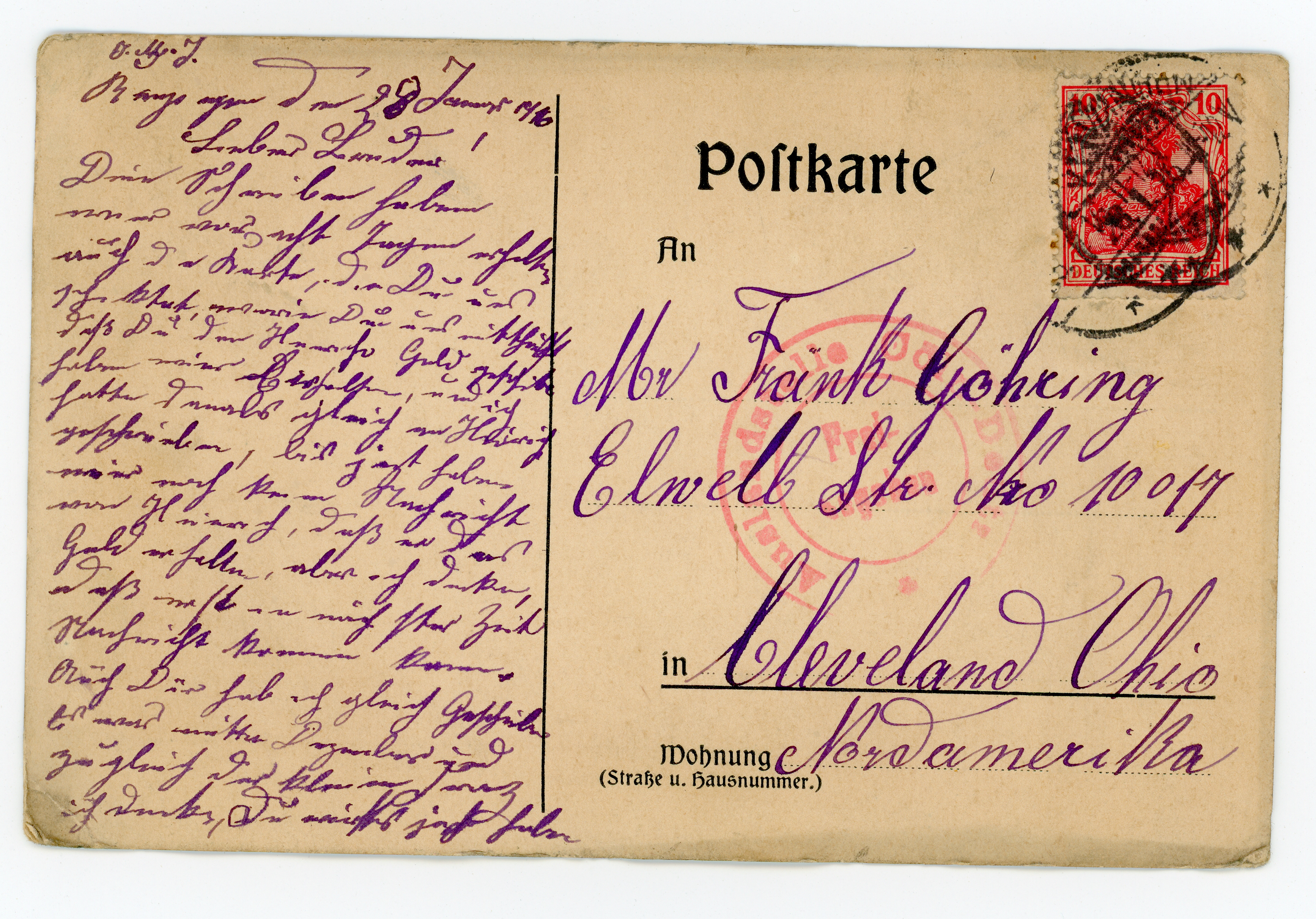
The postcard letter from Rosa
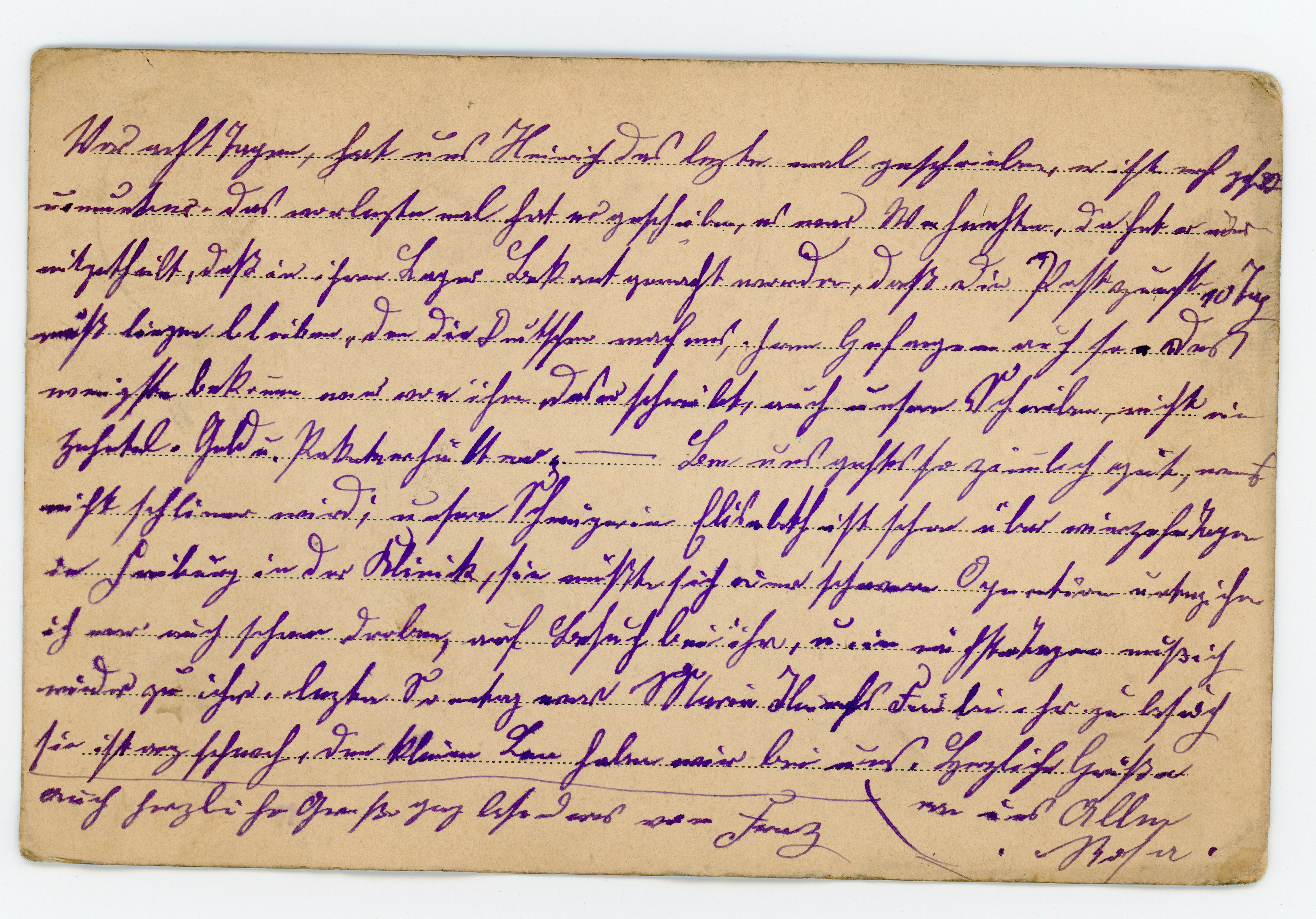
"very distressing"
The ICRC report also offers a short description of some of the various camps, which are set up really differently depending on the region. Heinrich was moved around a lot (more in the next post about tracking his movements) and one of the places he was kept was Biskra. Here’s how the report describes it: “The third type of camp is that of the desert regions. We encountered them in the oases of Biskra and Ourlal (30 kilometres south‑west of Biskra) and it is again the same at Touggourt in the open Sahara. In the palm grove, it is camp life under canvas. No ditch, no barbed‑wire fence surrounds the 'marabouts' which shelter the prisoners and the guards. In the middle of the oasis, very close to the great date palms, near the irrigation canals derived from the wadi that supplies the palm grove, the white conical tents are lined up, under which 10 to 20 men sleep.”
The ICRC website shows a set of postcards with pictures from the time period including the one of Biskra pictured above. The site doesn't have either of the postcards that Heinrich sent to Franz.
Sign up for updates. Share on socials.