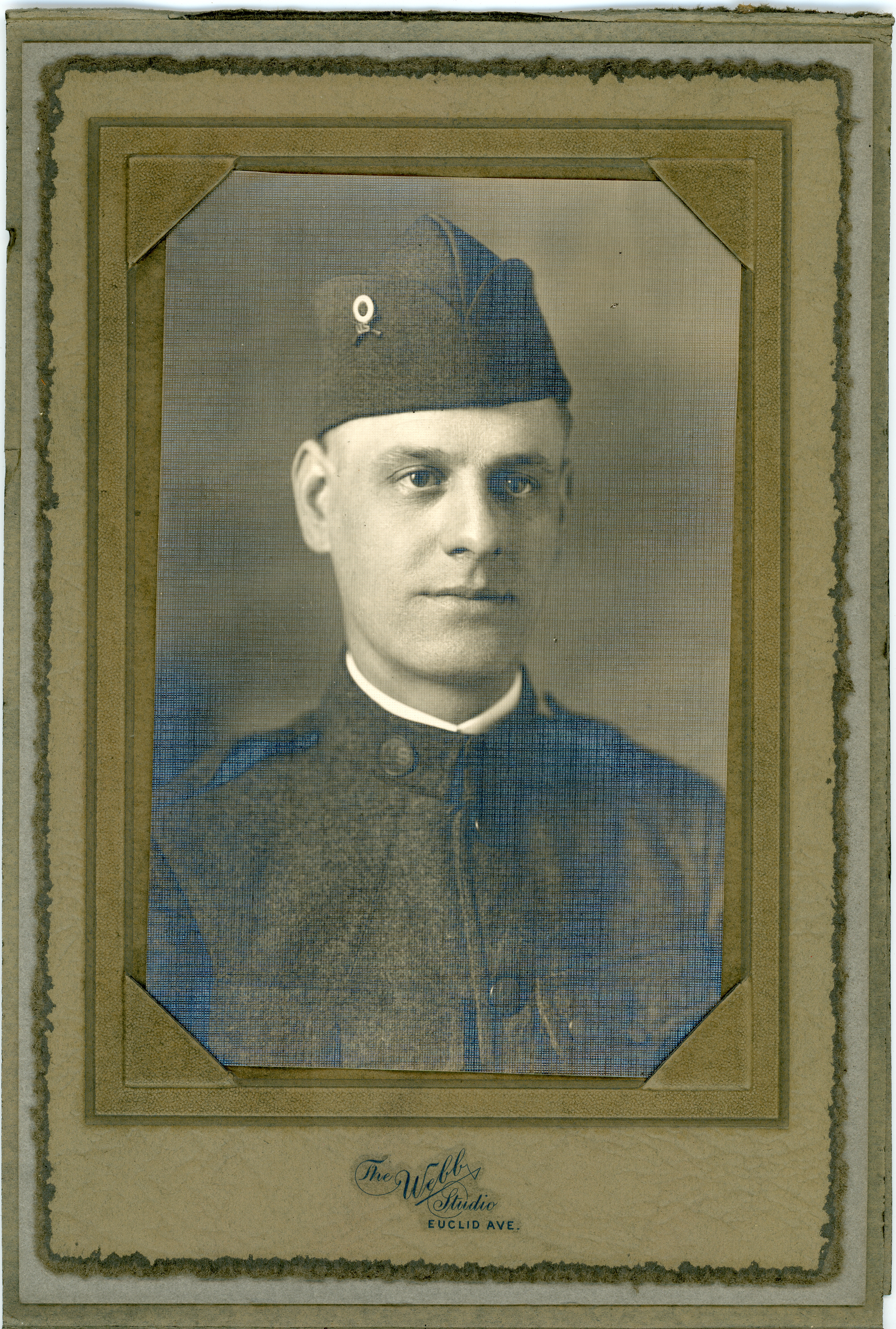
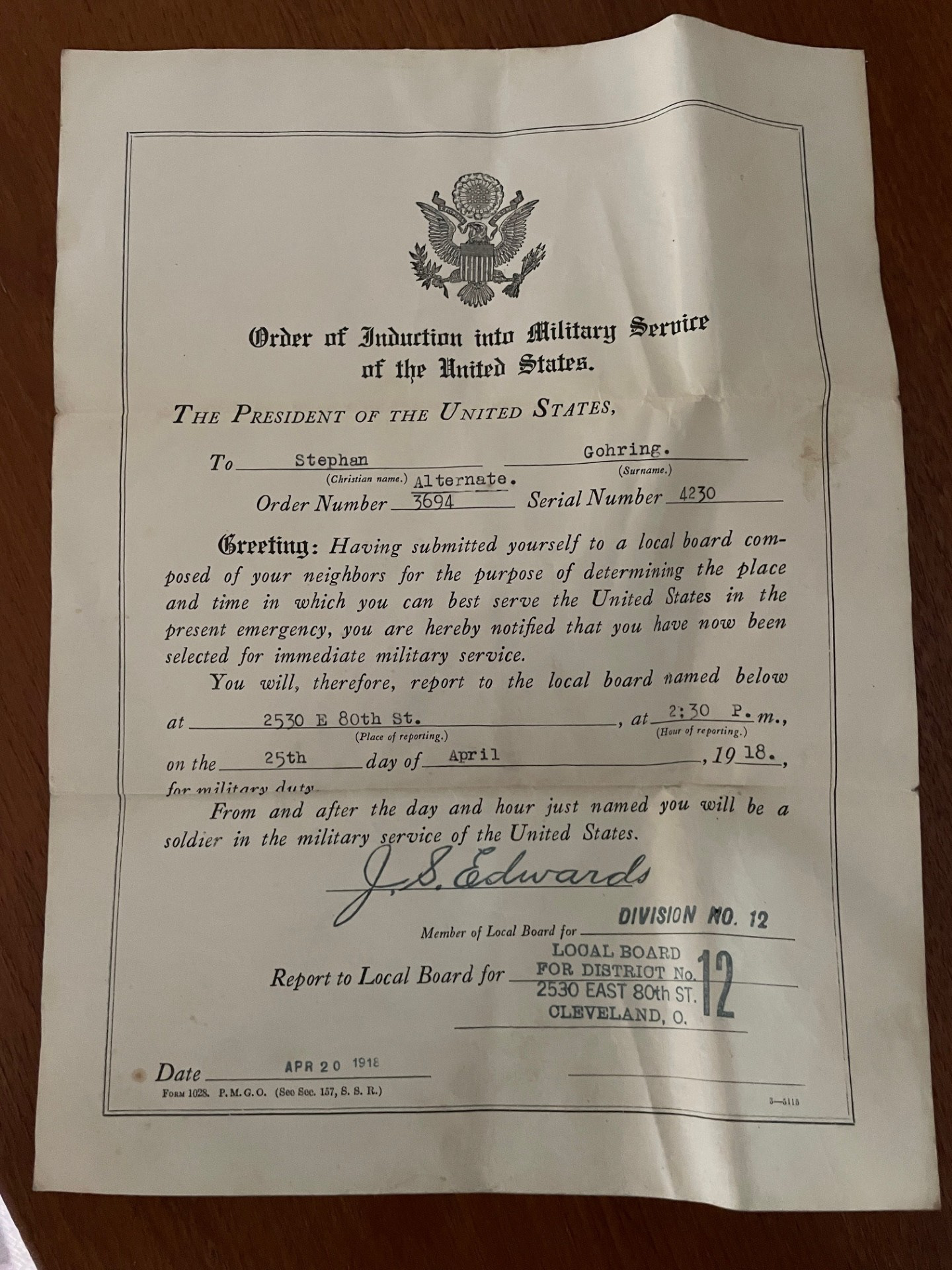
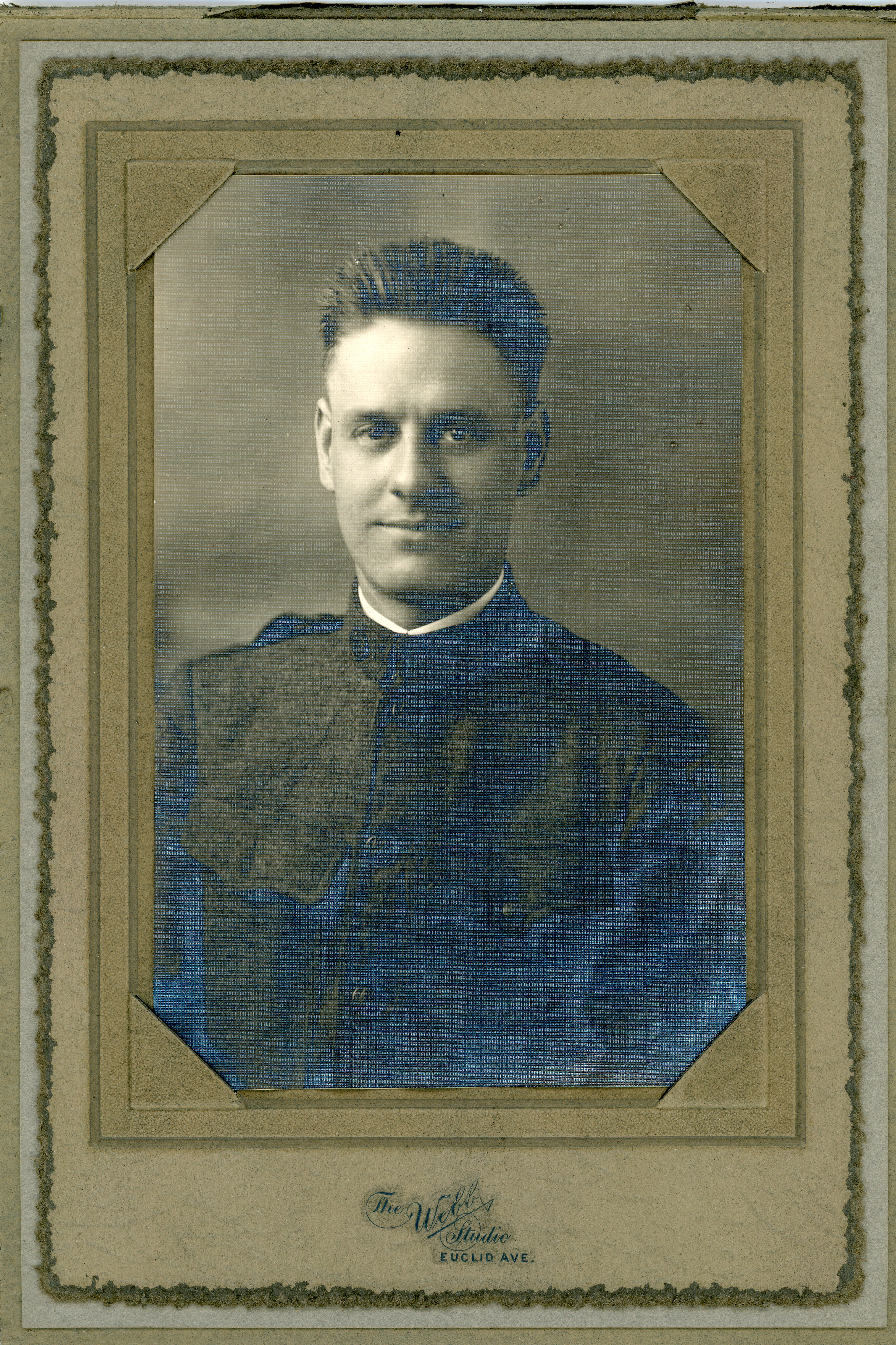
On April 20, 1918, my grandfather was ordered to show up five days later for military duty.
I can’t really imagine how it must have felt to receive that letter. The war started almost four years earlier, in July 1914, and the U.S. entered the war a year before he got called up – in April 1917. The newspapers would have been covering it incessantly. My grandpa surely was aware of the letters that his dad was getting from his brother, who at this point had suffered in a POW camp in Algeria for a couple of years, gotten malaria, and been sent to Davos because he was so sick. And now it was my grandpa’s turn to head over into the madness.
Judging from my grandpa’s first letters home from Camp Sherman in Chillicothe, Ohio, I imagine there was a bit of a panic in the household. Five days after he showed up for duty, he wrote home, “I will probably send a lot of my things back in a few days.” Four days after that, in another letter, he further explained, “I’m sorry I bought all the junk I did because I don’t need any of it. I might send some clothing home soon but you will have to pay express from the station.” In my imagination, he went out and bought a whole bunch of stuff he thought he might need only to find he’d be issued what he needed or maybe not allowed to bring all the stuff he’d bought.
“There are about 40,000 men in camp the way I heard and there are coming in and going out fast,” he writes. My grandpa was called up on the cusp of the huge final draft of the war. In the first wave, between June and December 1917, 527,100 men were sent over, according to a report from the National Library of Medicine. The second draft, which my grandpa was technically part of because it ran from January to April 1918, sent 414,000 men. But then the final wave, from May to November 1918 called an astounding 1,871,344 men. That's an enormous ramp up and may explain why my grandpa's letters seemed to reflect a feeling of uncertainty about the plan and a rushed timeline for training and shipping out.
In these early letters from camp, he talks of the terrible cook, training with rifles, getting vaccinated and all the gambling that goes on in the barracks. He’s upbeat, reports of refreshing canteens in camp and lots of theaters and shows, although he says that they are in quarantine because a couple of guys in his squad are sick. He may have gotten a quick trip home as he writes his brother Clements in May that he won’t be home for five or six weeks, although I haven't read any evidence that that happened. But it all must be starting to feel real because in one letter my grandpa says, “Let’s hope the war is over with by the time I get ready to be sent over there.”
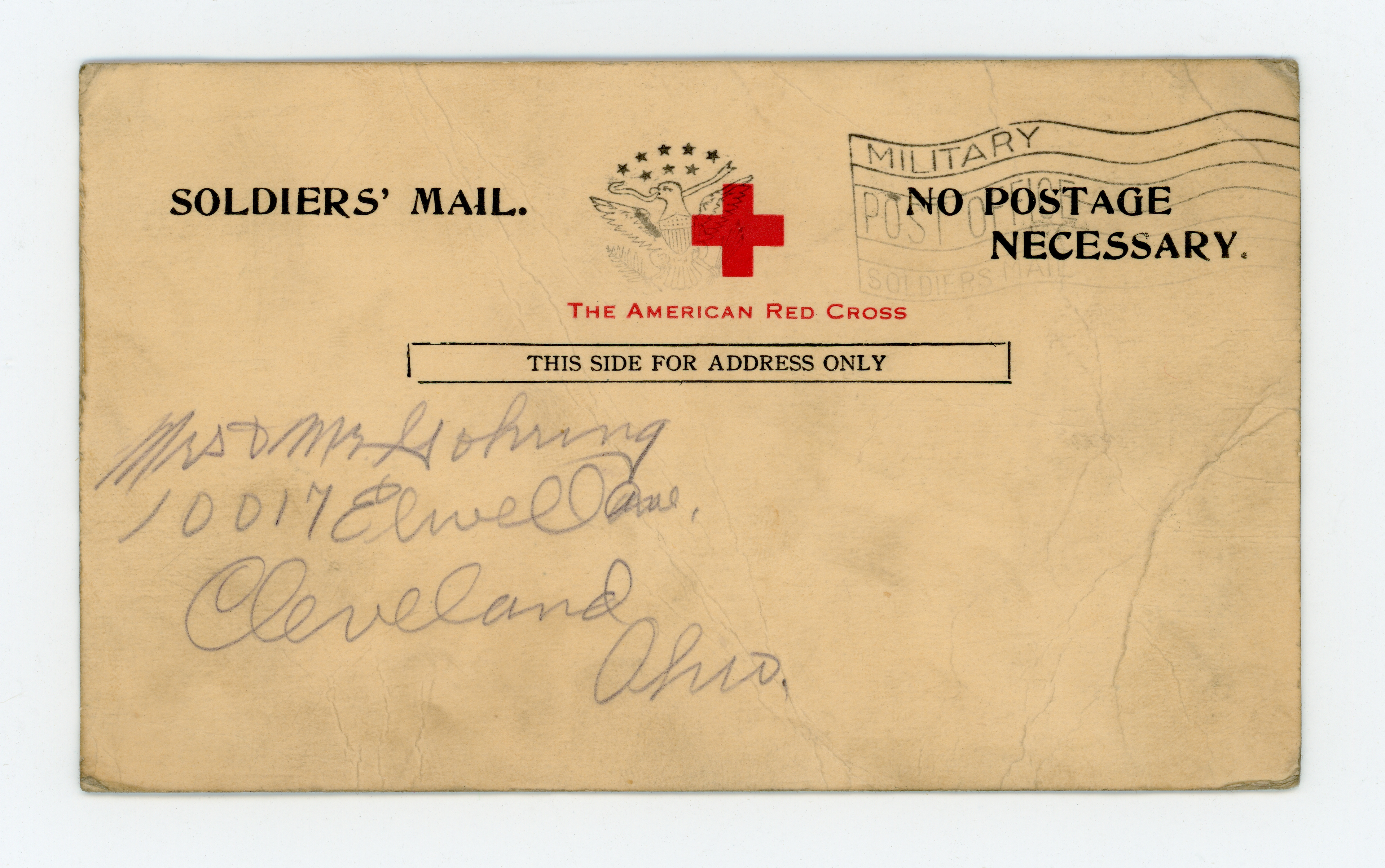
Alas, it was not to be. His next letter is dated June 25 and postmarked Southampton – he’s landed in England. It’s the first envelope with the censor’s stamp. “Our boat arrived acrost safely and was not a bit scared of submarines and I am feeling fine,” he wrote to his parents. That line makes him sound so young! He was, relatively speaking, at 22 years old. Apparently at some point he had moved to Camp Merritt, in New Jersey, and shipped out much faster than expected because he writes that he hopes his brother Leonard didn’t come to see him after he’d already left.
In most of the letters he inquires whether his friends from home have also been drafted and speculates about who might be next. “Maybe Leonard too, so that will leave things uncomfortable at home but I hope it will be over soon. I want to make one more trip acrost the ocean and that on my way home and then never no more.” He closes the letter sounding homesick. “I long to see you all again and hope I do and with the best of luck I wish you all health and luck and must bid you all good bye for the present. I am your loving son.” Under his signature he writes he’s in Co. A 329 Inf. 83 Division, and writes “Somewhare in England.”
He doesn't sound so blue in all of his notes. Two more newsy letters from “somewhare in France” arrive next. He has messages for all of his siblings and asks about his brother Pete’s rabbits. Pete was born in 1904 so would have been 14 years old and was apparently pretty enterprising, breeding and selling rabbits. Lots of the letters from both directions reference the rabbits, with updates on their sale prices coming from home and my grandpa's descriptions of the rabbits he sees in France. I've included here one entire letter -- it's longer than most (maybe the longest) and chock full of tidbits and observations about my grandpa's days and questions about everyone back home. He offers to send home money: "I can use all my pay here but most of it would be spent foolishly," he admits. And later, "I hope that Leonard is still working and making good money for I know you need it."
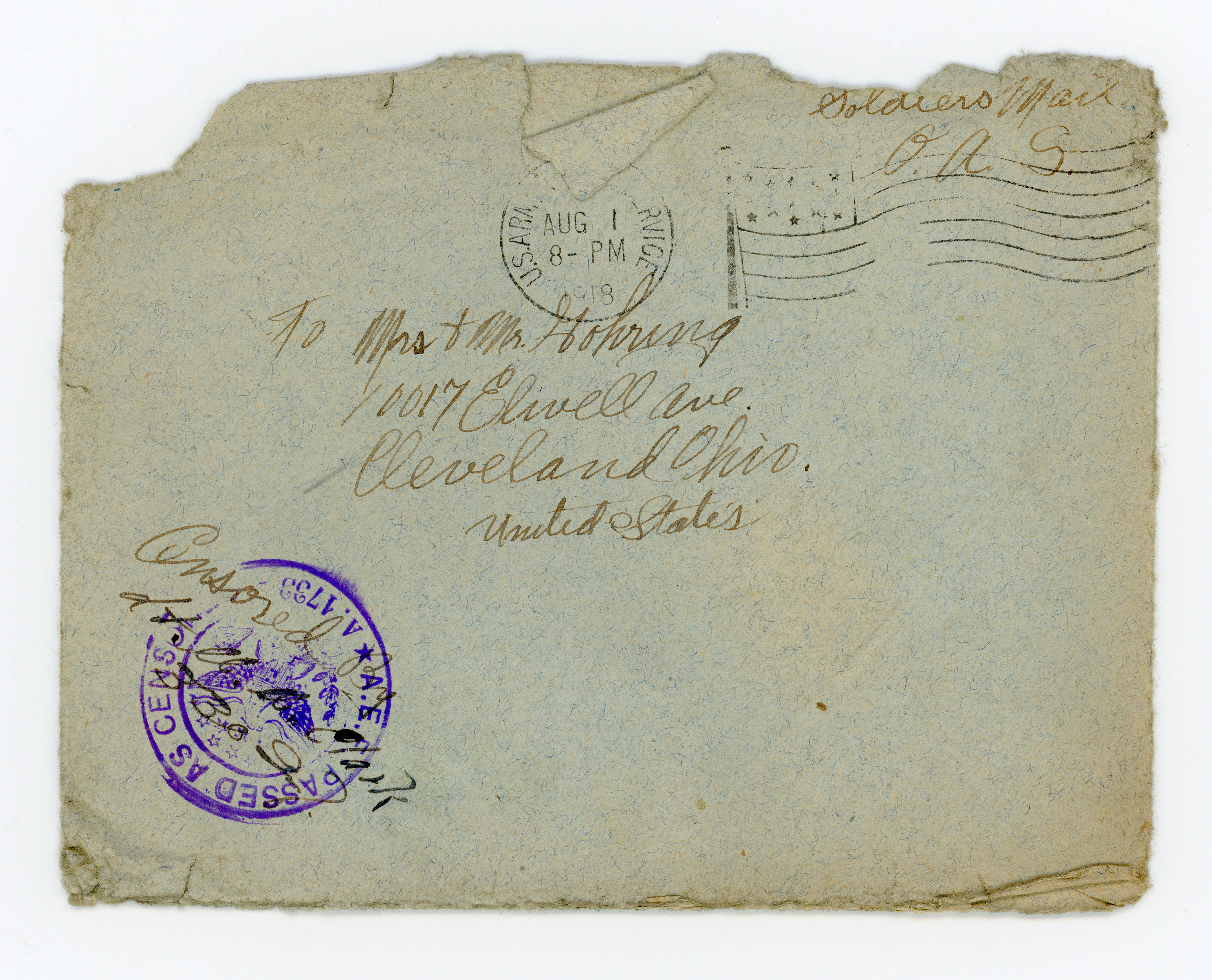
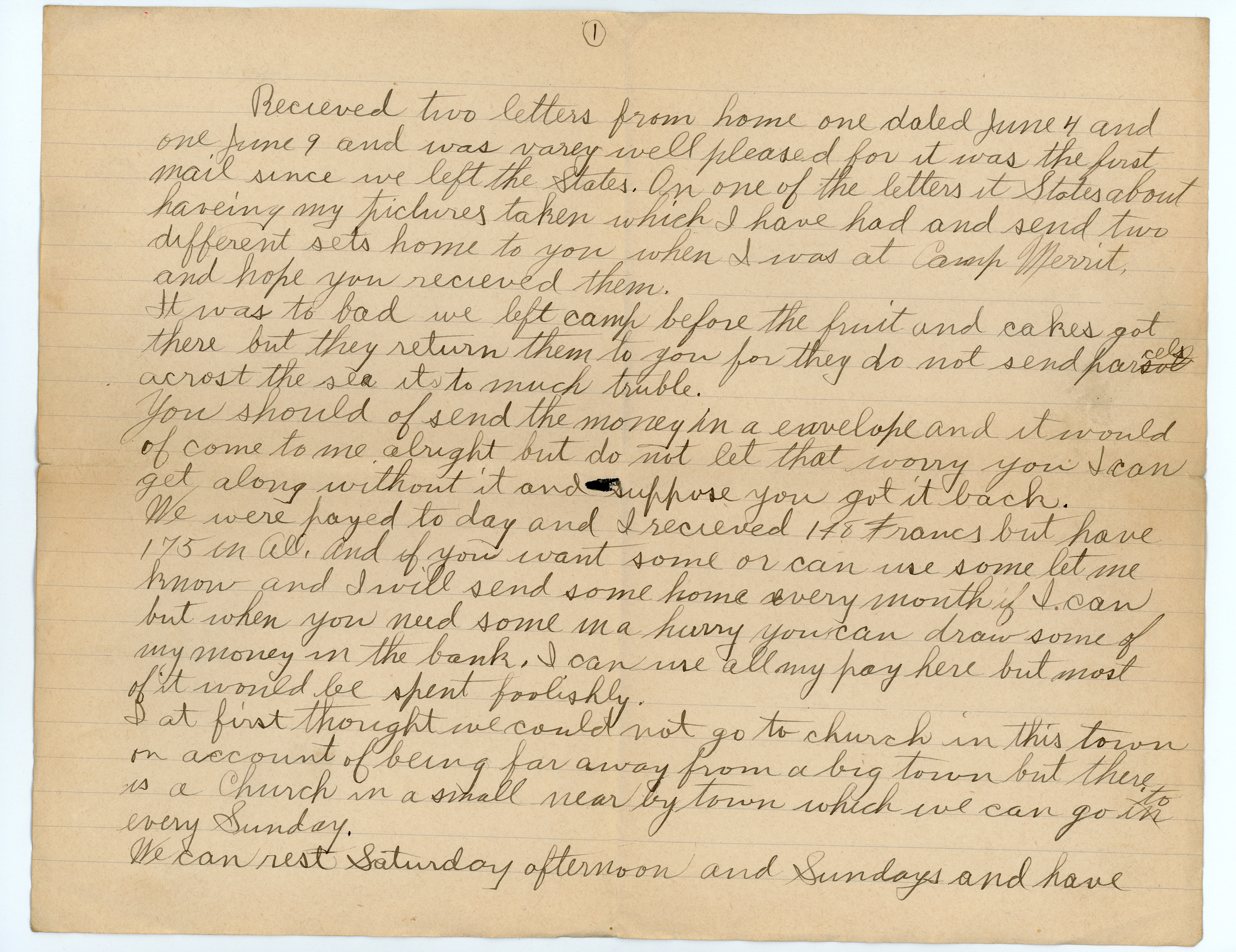
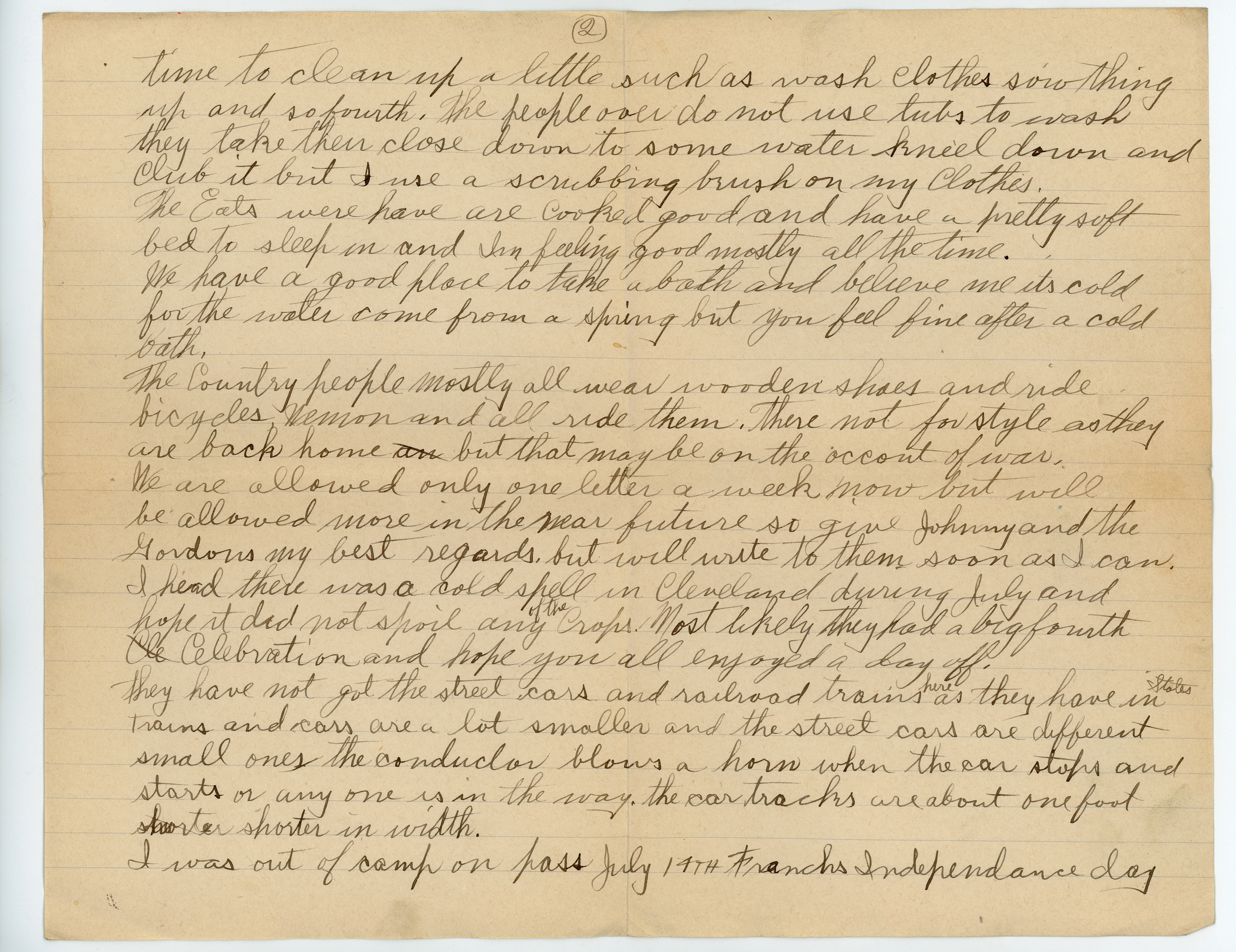
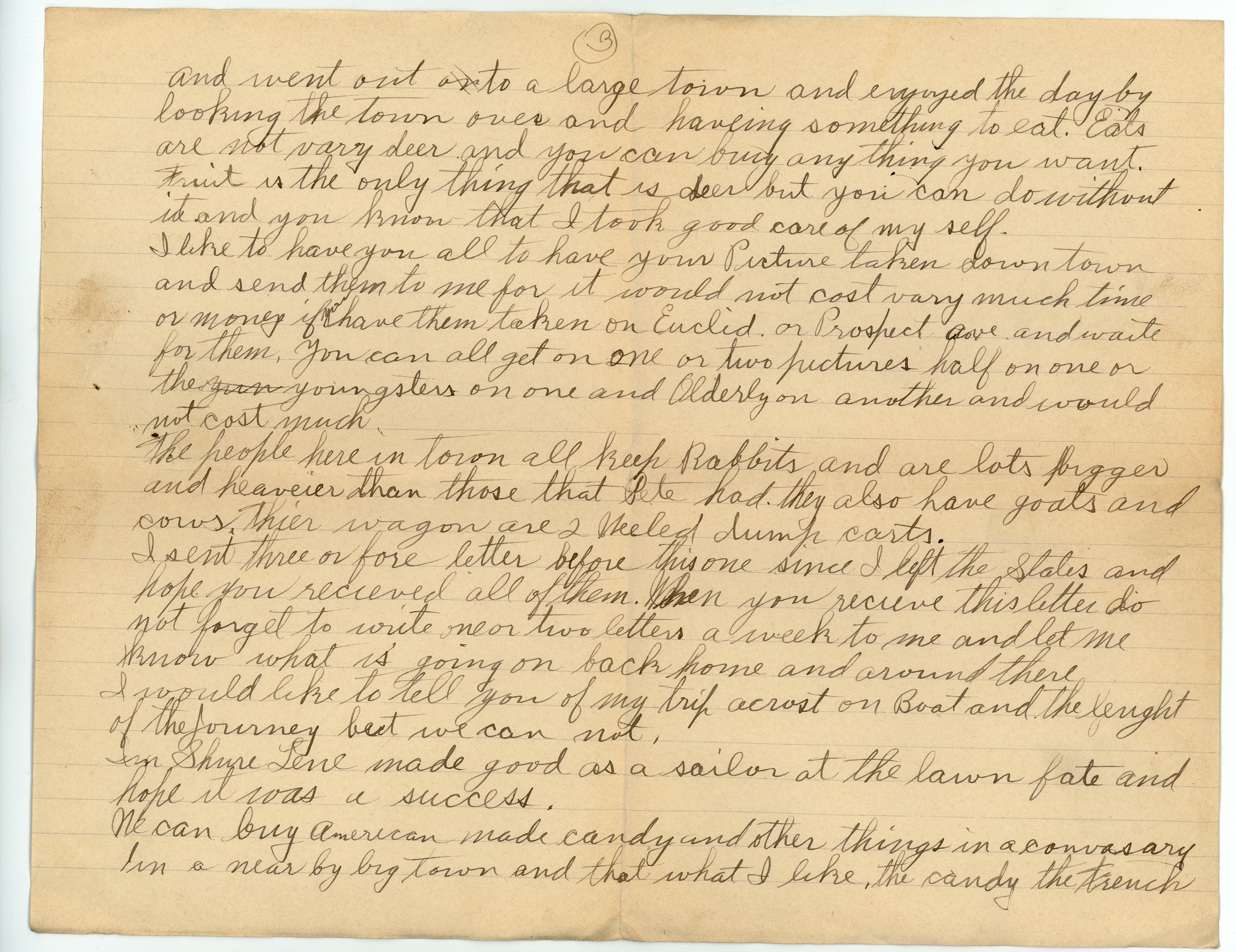
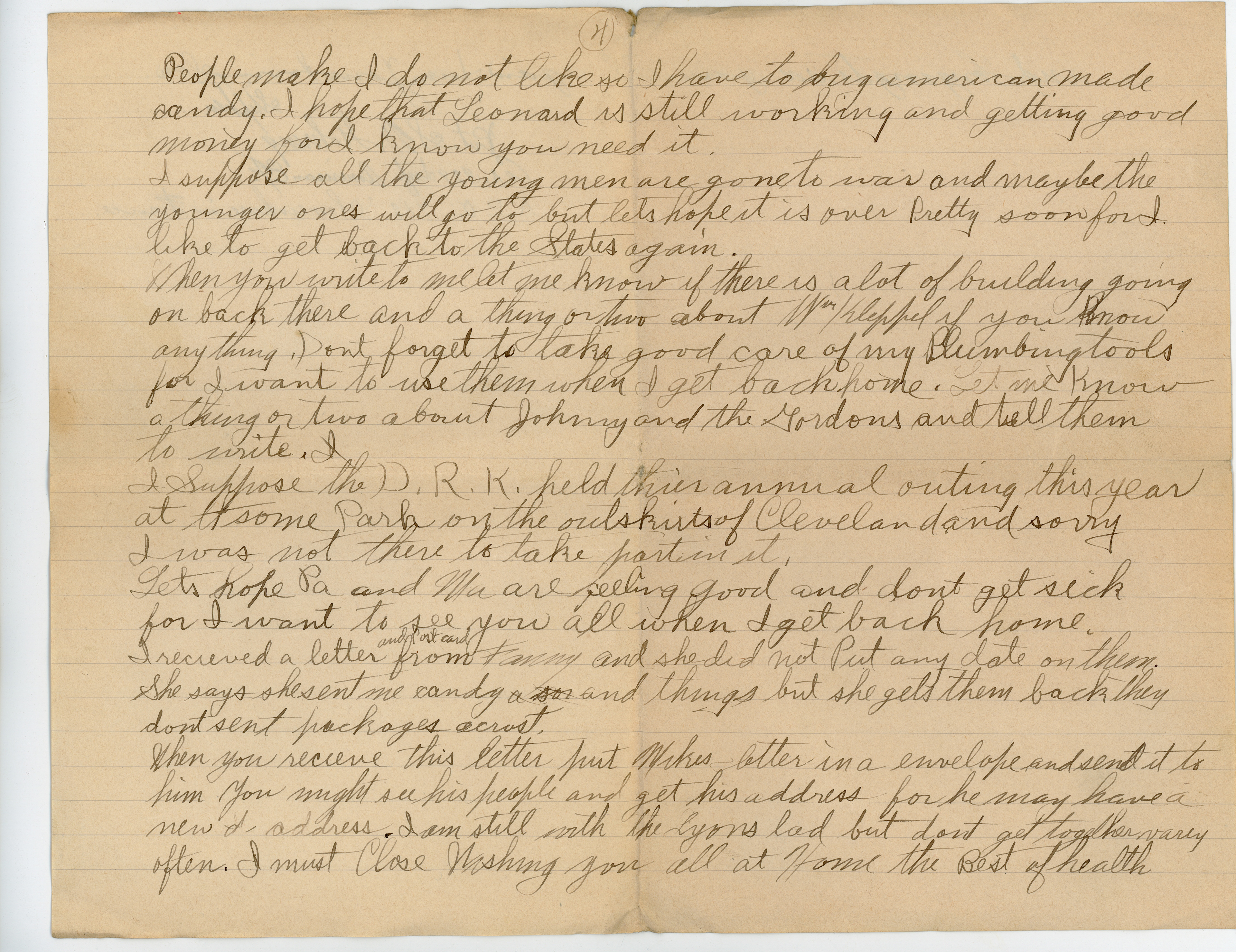
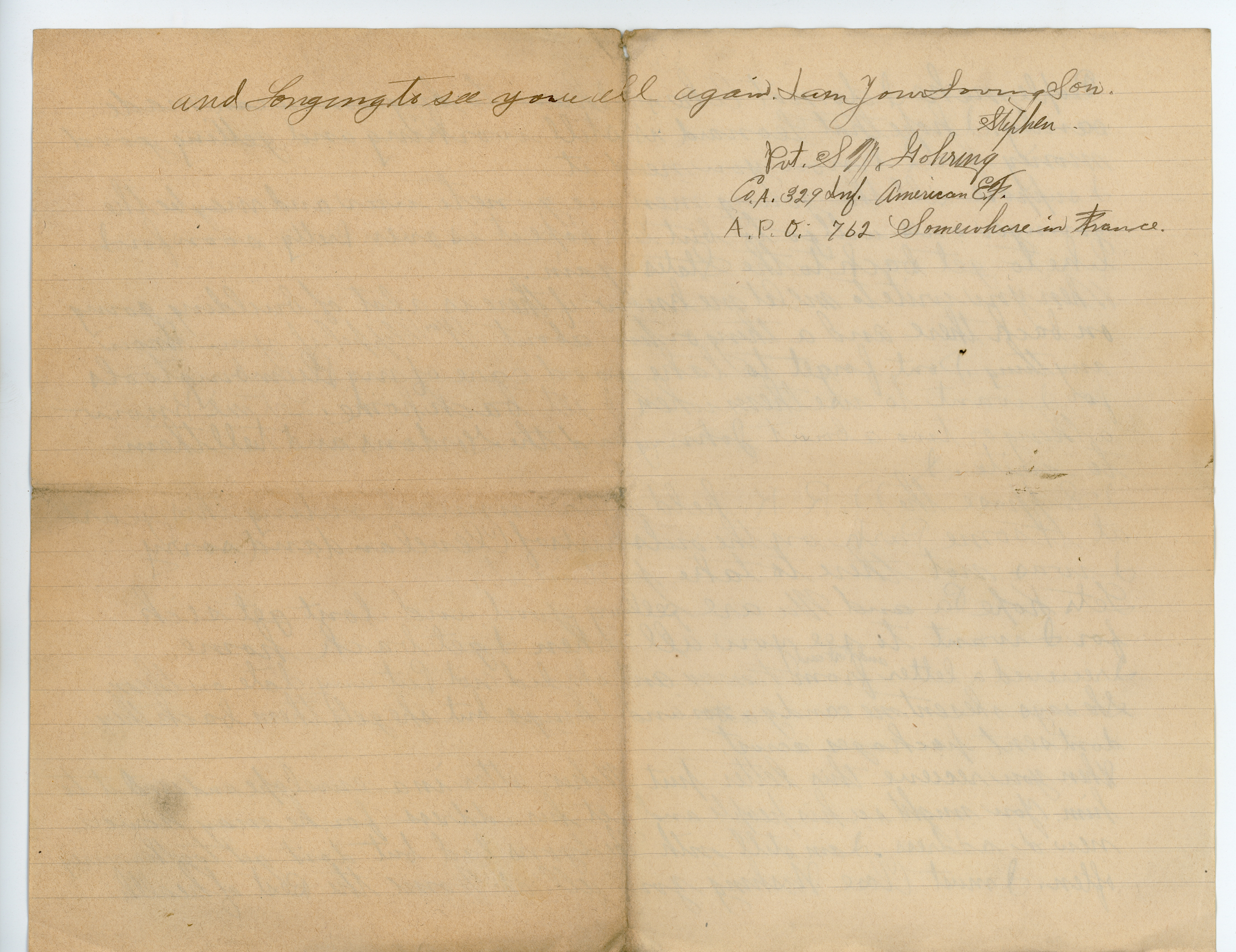
At this point my grandpa is still far from the front lines and at times enjoying an introduction to France. “I have not contracted the drinking or tobacco so far but I take a drink of cider or wine once in a while. The things are very strong over here. The cigarettes are as strong as a big black cigar. The coffee they sell in restaurants is strong. I put three times the amount of water as coffee I had in the cup and then I could not drink it and the wine will knock you for a curve, it got a kick like a mule that is if you drink a little too much,” he wrote. He references again the trip over on the boat, saying it took a little more than half a month. “Saw strange fish which hang in blocks and dive out of the water and a few sharks but I don’t know what they were. We had a little bad weather which rocked the boat a little but I did not mind the trip. Having gas mask training and the last training we get so I may be making some of the big noise over here. I remain your loving son.”
Knowing what I do about what's to come for my grandfather, he sounds particularly young and innocent through the highs and lows described in his letters. It's hard not to feel sad for all these guys, even the lucky ones who make it out the other side.
In one letter he says he enclosed a couple of postcards that he bought in England. In the giant stack of postcards I found one that shows Southampton High Street and suspect that might be one of them. He also references sending home some photos and they could be the fancy portraits above, with him looking fresh and clean in his brand new uniform.
The subsequent letters hint that things are about to change quite a bit for him -- more on those in a future post.
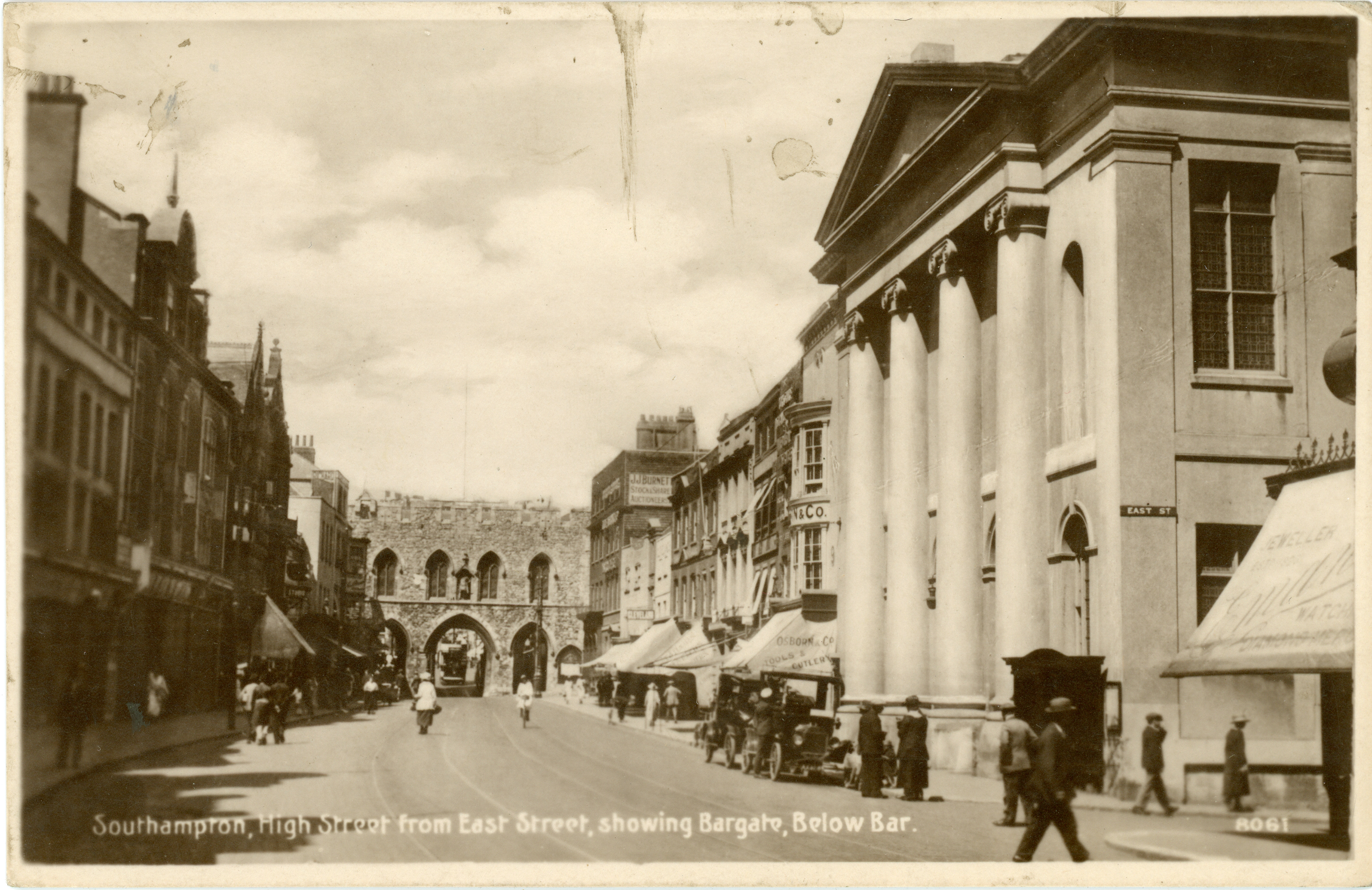
Postcard from Southampton, England
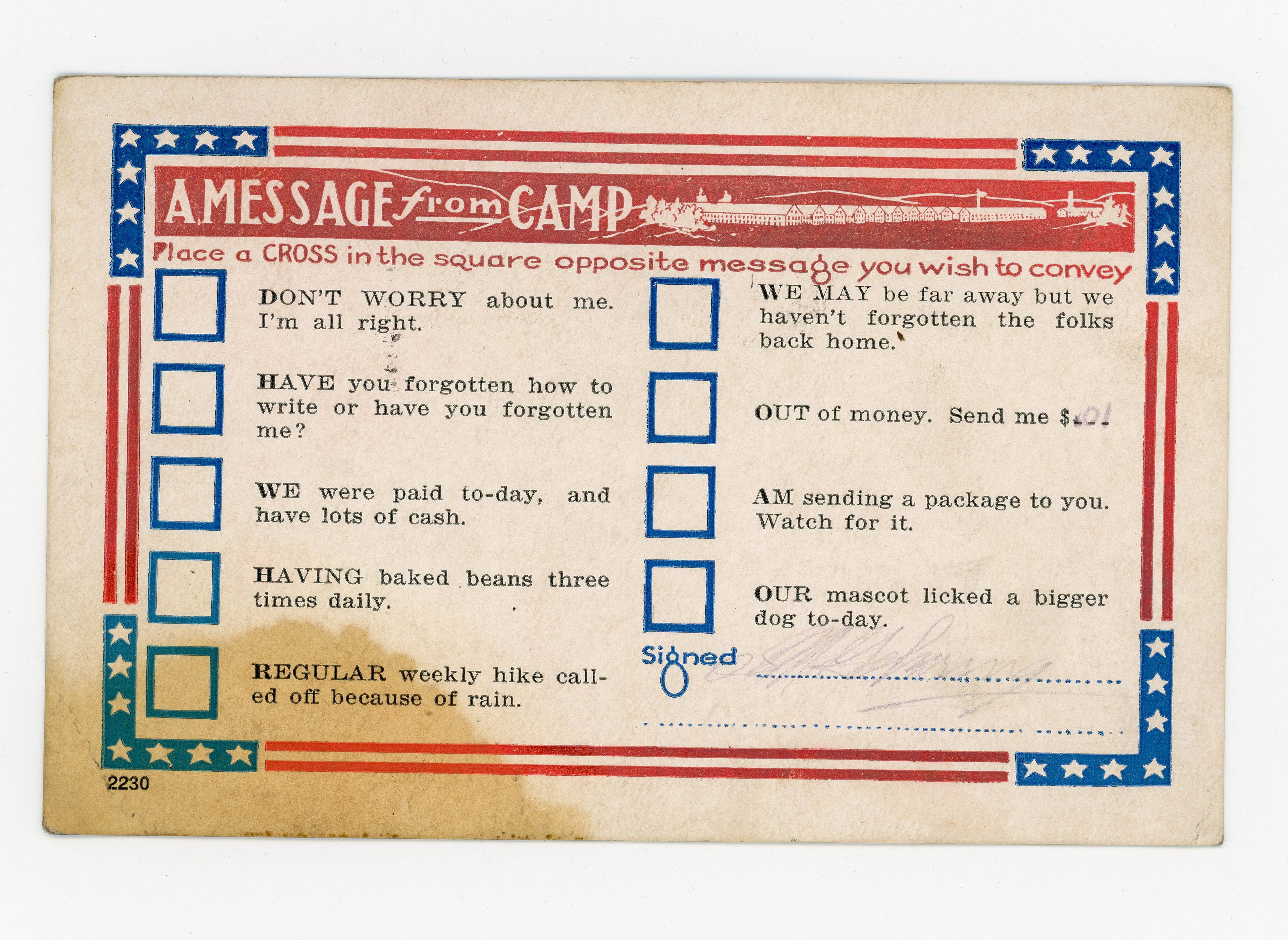
Funny postcard from camp
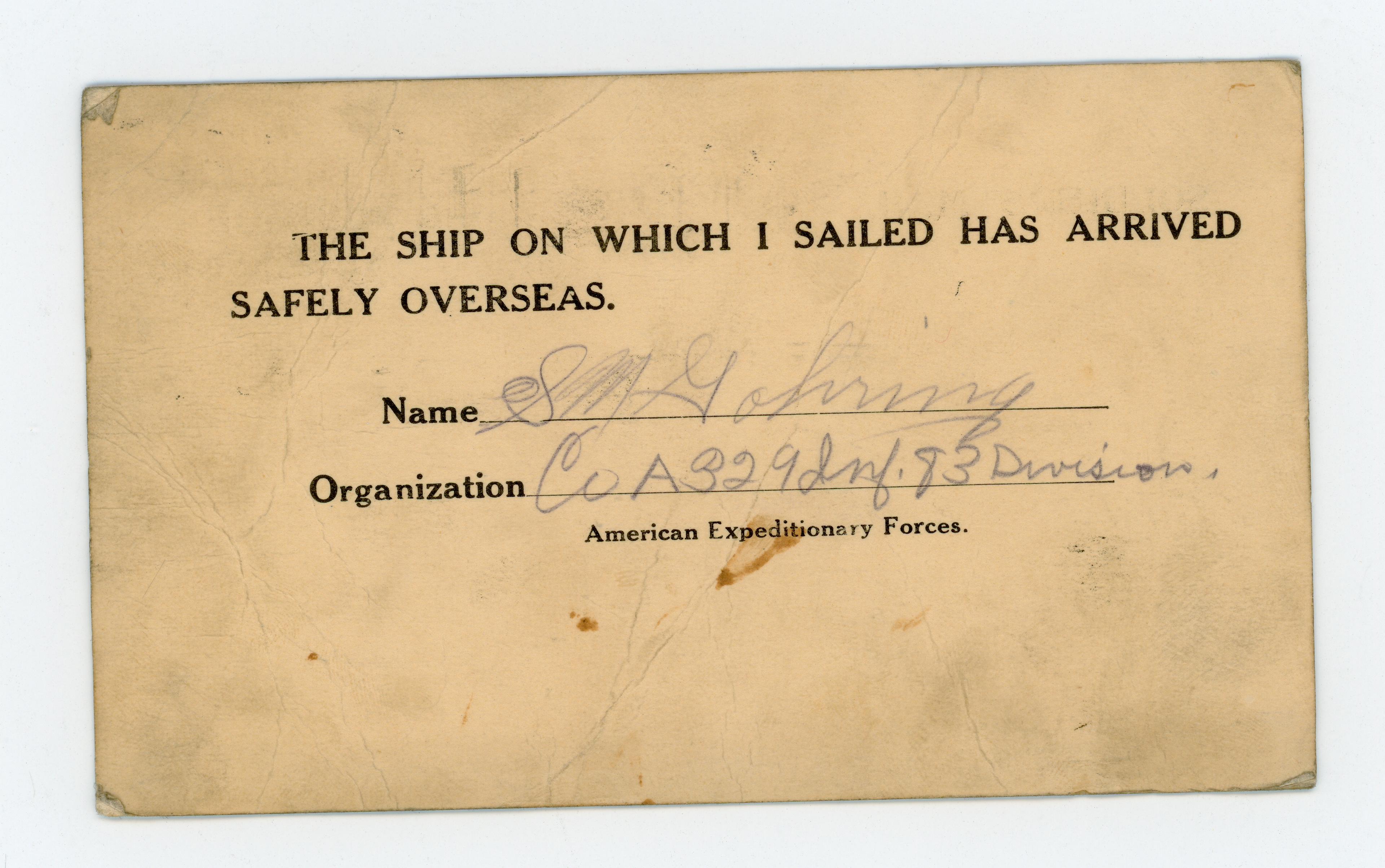
Generic postcard home, saying he landed
Sign up for updates. Share this post on socials.