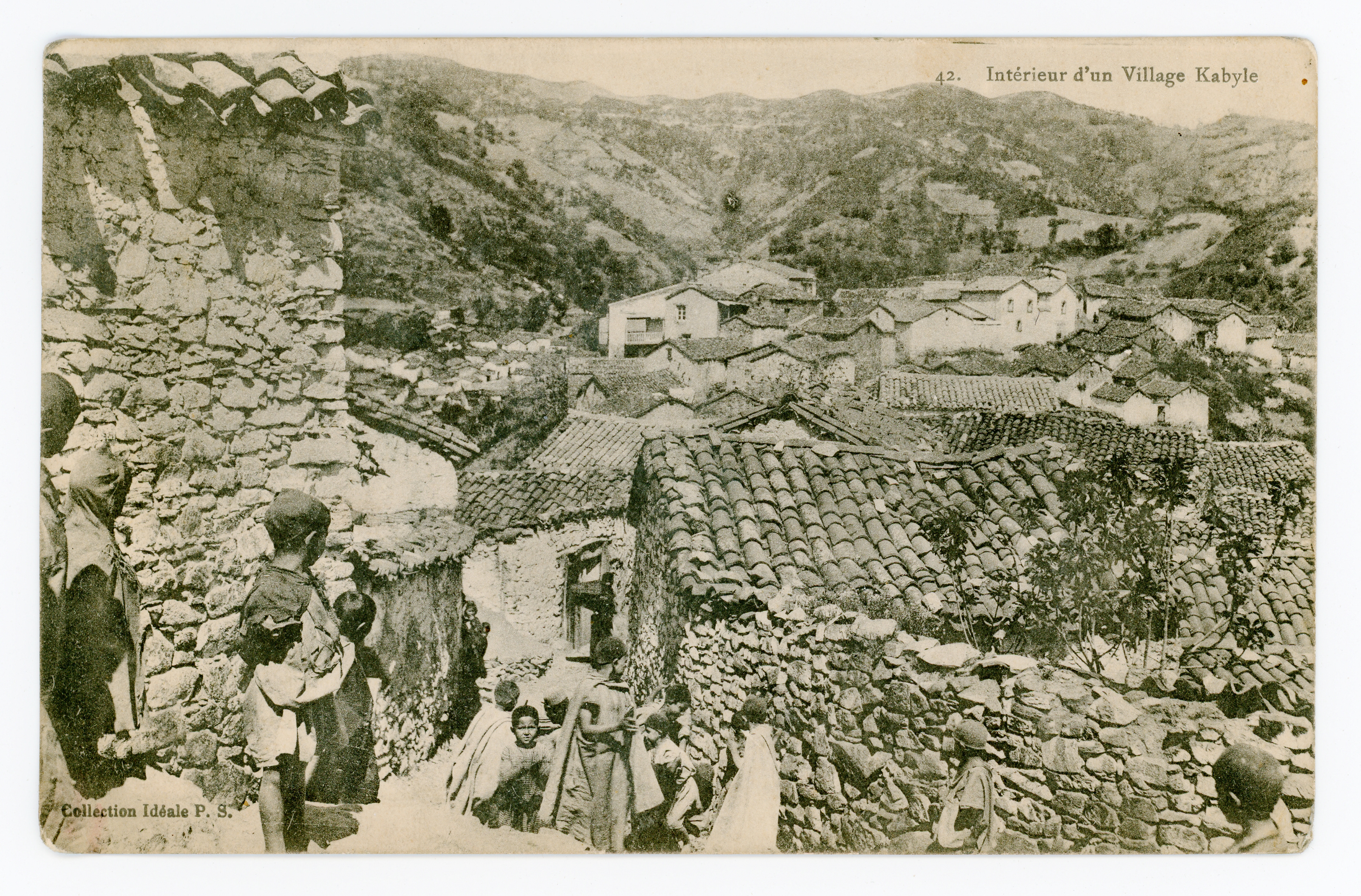
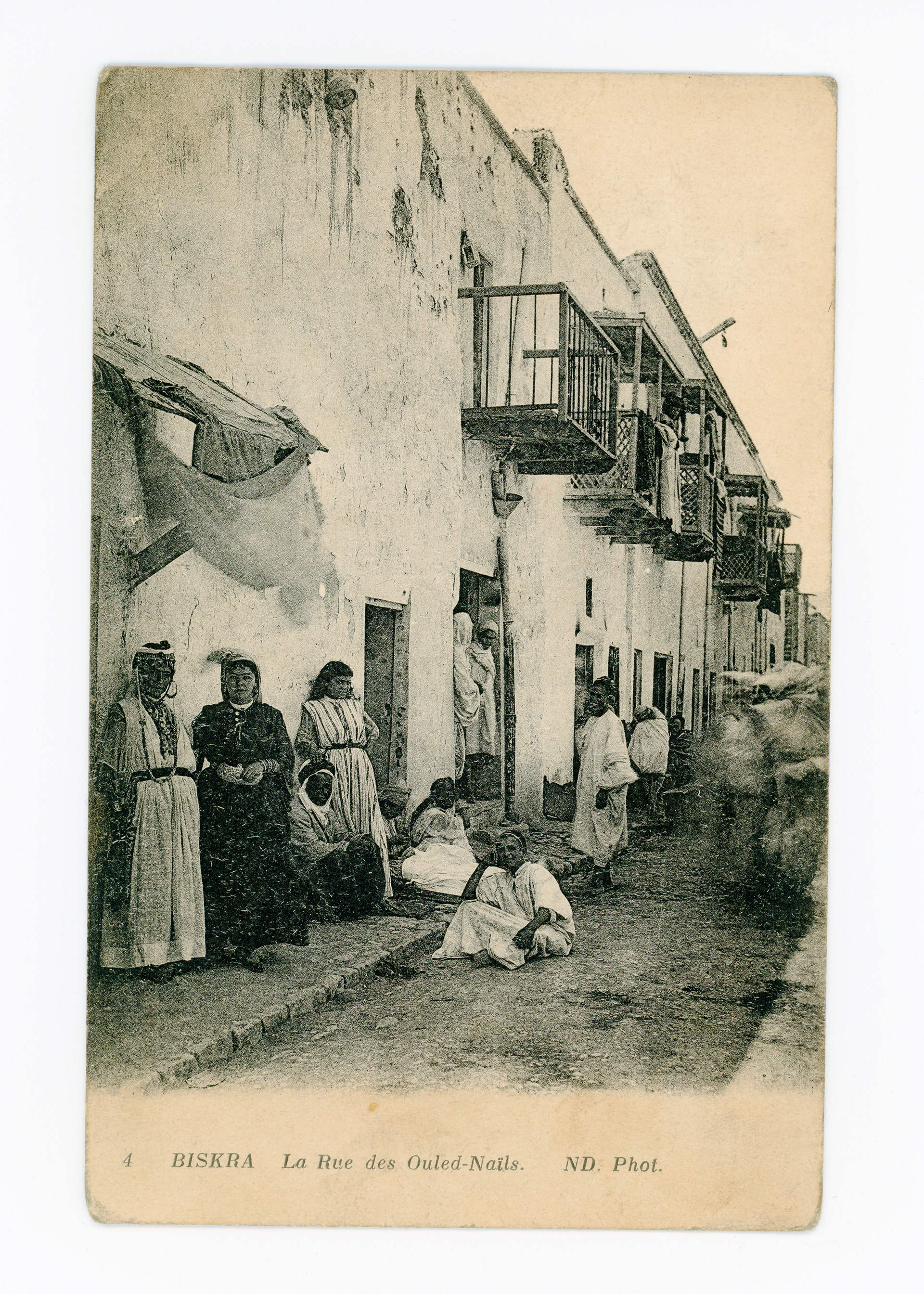
Once I started digging into the box of German letters, the low hanging fruit were the postcards since they tell a story in pictures – no German required. There are three like the one I posted earlier that show bombs being dropped, and there are a few other religious ones. But then there were two particularly curious postcards that showed black and white photographs. One is of a small town street and another is more of a village vista, but they don’t look like Europe. The people pictured are wearing robes and head coverings. On the front of the postcards is writing in French, and on one, my eye was drawn to the word “Kabyle.” My first thought was that was the French word for Kabul, but remembering back to my WWI history I didn’t think there was fighting in Afghanistan in the first war.
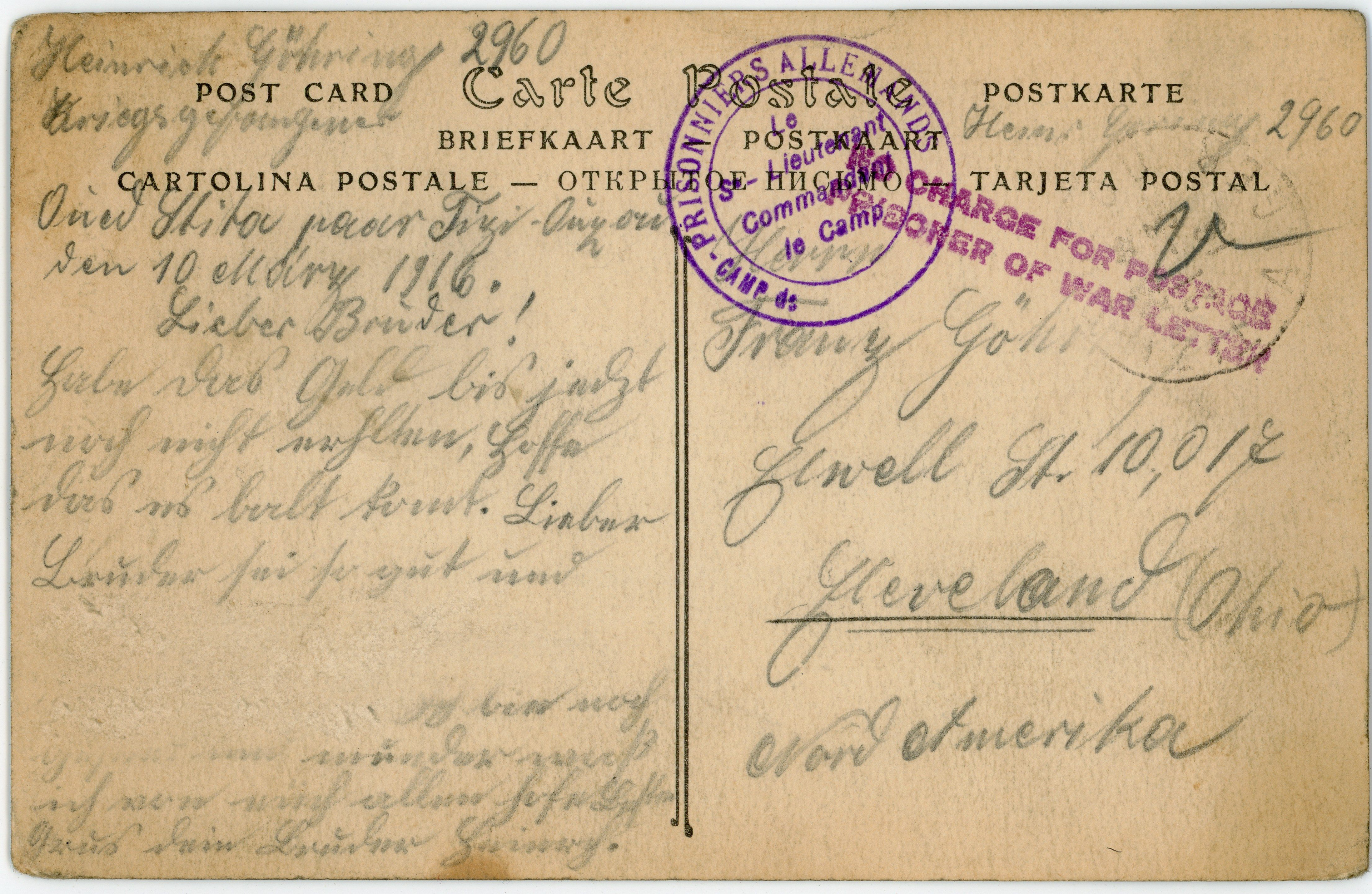
When I flipped them over, the writing on the back is particularly hard to decipher. It’s written in pencil against a beige background and on one of them it looks like some of the writing has been erased. That’s when my jaw hit the floor. In the top right of that postcard is a purple postage stamp that reads, in English: “No charge for postage. Prisoner of war letter.” After seeing that I searched online for Kabyle and discovered it’s a town in Algeria. A little more Googling and I found that the French sent some German POWs to camps in Algeria.
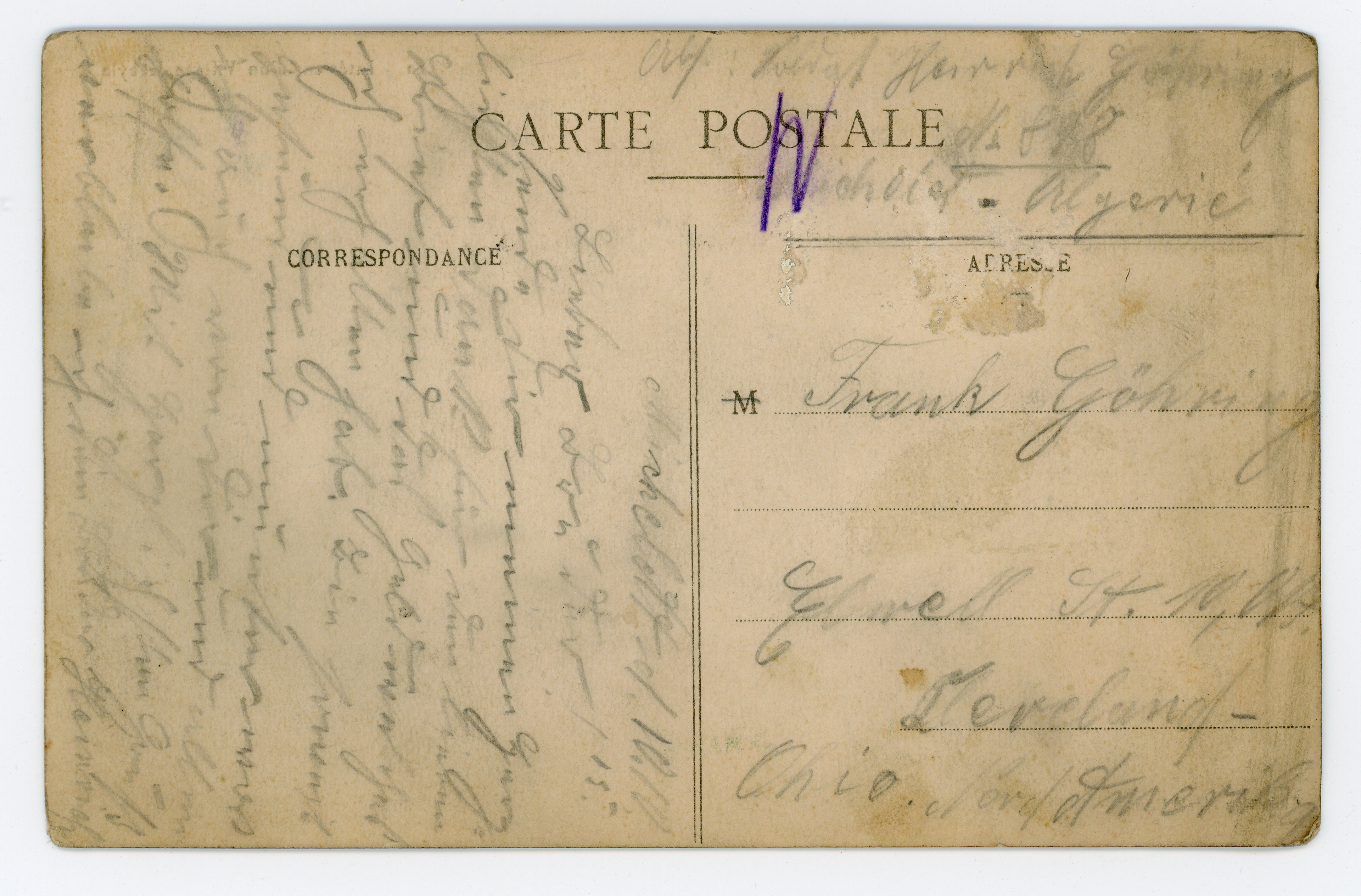
The backside of the Kabyle postcard
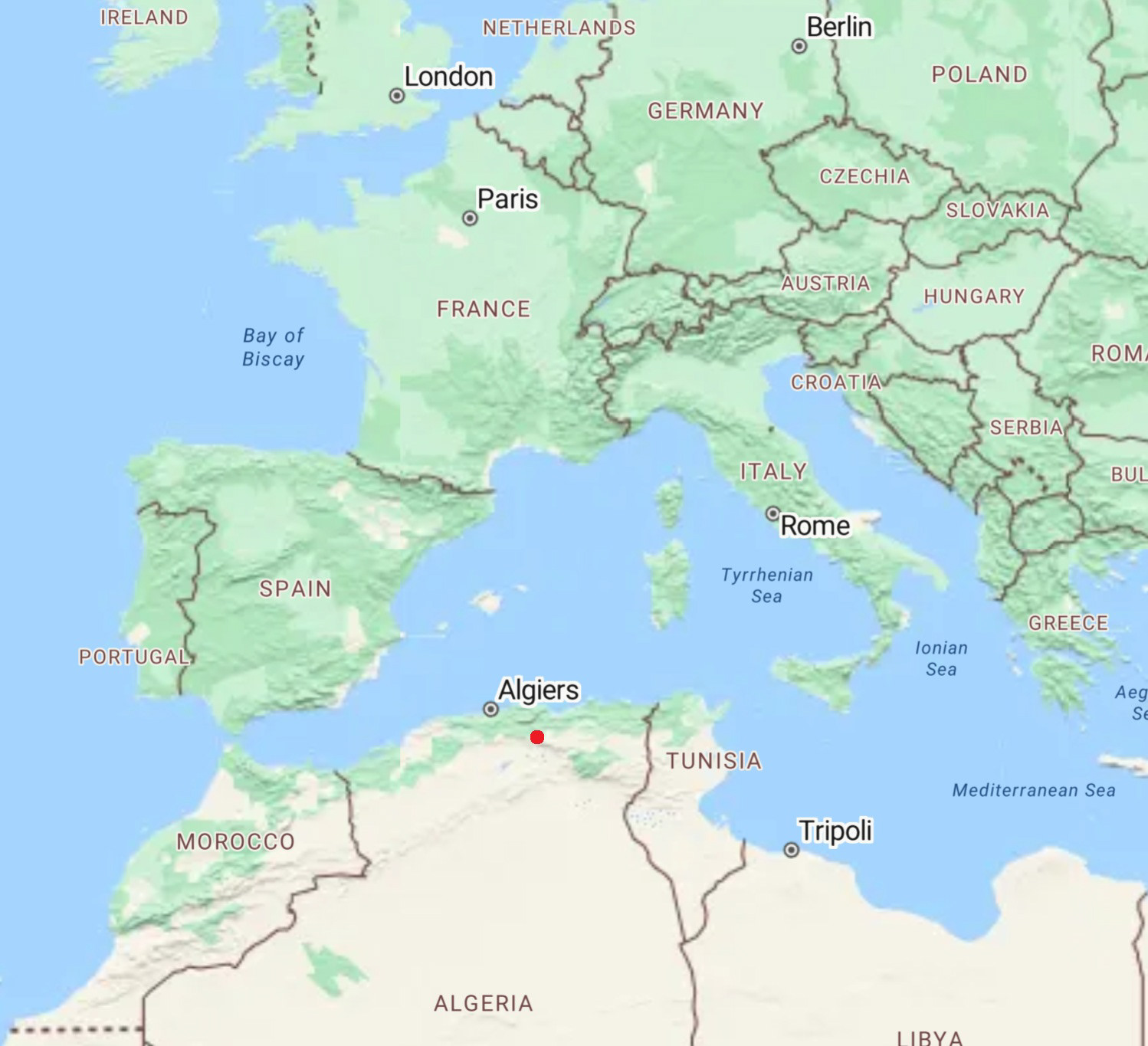
Heinrich was near the red dot
The backside of the Biskra postcard
Remember in my previous blog post I referenced being able to make out a couple of words that hinted at another piece of the puzzle? Near the end of that postcard you can pretty clearly make out "Algerien" and "Afrique." While the date on that postcard is pretty hard to decipher, it's signed by Rosa and I imagine it references Heinrich being at the camp.
Some of her letters offer a bunch more detail. One written by Rosa to Franz in February 1915 may be the first to inform Franz of Henrich's capture. Rosa writes: "I would have written to you earlier, but I had no time, and when I had a few free moments, they were too exhausted to write. Heinrich has been away since August 6, and on October 7, he was taken into French captivity." Then there are some bits of the letter that our poor man's translation process didn't do great at but you can make out the word Marseille and then "at the beginning of December a letter arrived from Algeria informing us that he was in Tizi Ouzou."
It's possible that the letter she refers to is similar to a postcard sent to Heinrich's wife that Rosa sent on to Franz. Pictured below is the postcard, addressed to Frau M. Gohring -- presumably Heinrich's wife -- in Germany. It doesn't have a lot of writing on it but you can just make out Heinrich's name, "no. 898" which sounds like a prisoner number, and Michelet (which is also the postmark and in later letters the Algerian town where letters to Heinrich are addressed.). The confusing bit is what appears to be a date -- Aug. 16, 1915. That contradicts the dates Rosa references and if correct, could mean that Heinrich was only at war for ten days before ending up in a POW camp in Algeria. The postmark looks like August 29 (or possibly September, it's hard to read).
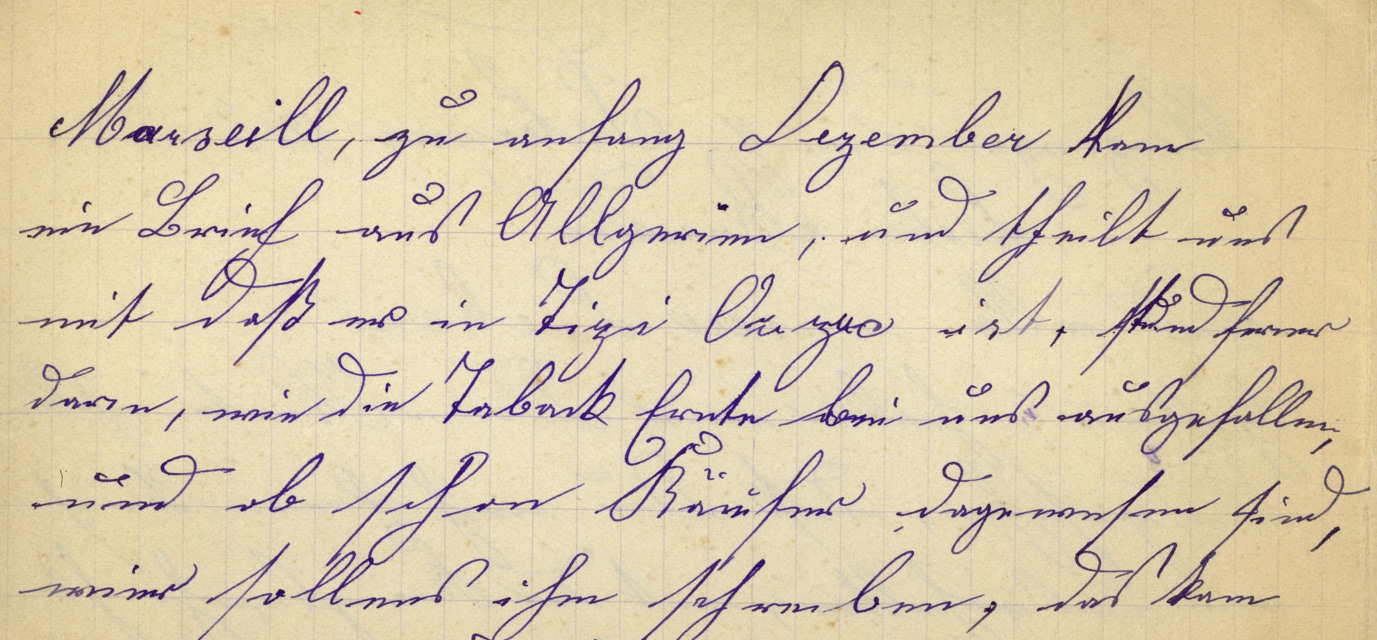
A snippet of Rosa's letter
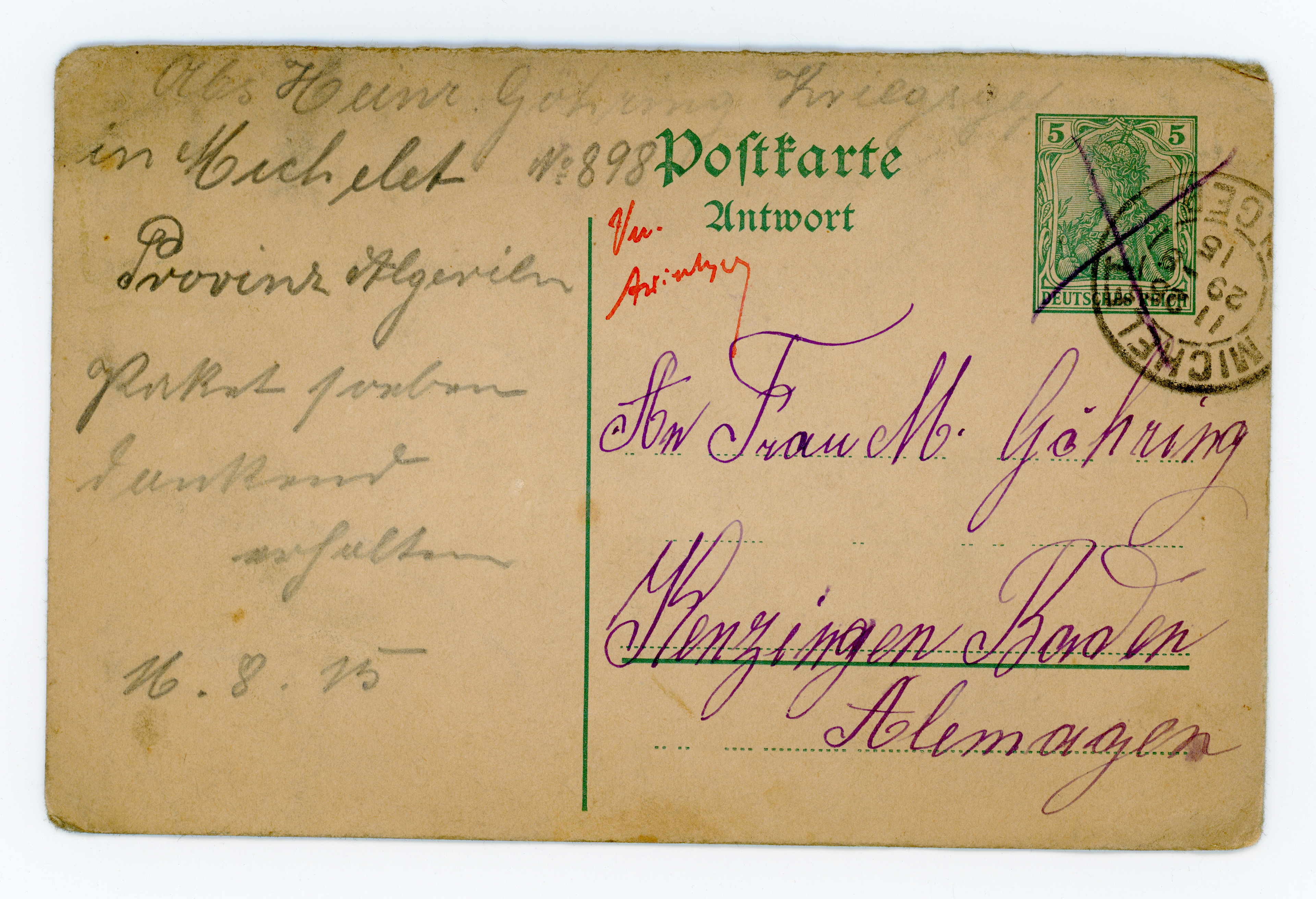
Postcard about Heinrich's location
This is when things start to get weird. In the same letter, poor Rosa writes that she received a letter from Heinrich but she's super confused. "It further mentioned how the tobacco harvest had turned out for us and whether any buyers had been there... which immediately seemed suspicious to us, since he had not yet cultivated any tobacco, and the letter was not written by his hand either." More on this topic later, because it's a mystery she grapples with for a while.
Rosa tells Franz that she has been asking around, writing letters to various people looking for information about Heinrich. Heinrich's wife, according to Rosa, receives a letter from someone whose husband is also in Tizi Ouzou, Algeria. Her mail doesn't seem to be reaching her husband but his letters are reaching her. She has asked her husband if he's seen Heinrich but hasn't heard back. Rosa writes: "They say that he died of starvation in captivity. But we cannot know that." I don't know if she's referring to Heinrich or the other woman's husband. Imagine the uncertainty, not only of where your family member is but potentially whether he's even alive.
And then some additional big news toward the end of this long letter -- talk about burying the lede. It seems that while Heinrich has been away, a new baby arrives. "On December 31, a little prince was born... and on New Year's Day he was baptized, called Heinrich Josef, and so far, thank God, he is healthy." The kicker is I don't yet know if the baby is Rosa's or Heinrich's wife's...
In my next post I'll share more about Heinrich's movements based on some digging I've done on the International Committee for the Red Cross's website, which required the warring countries to submit pretty meticulous records about the whereabouts of prisoners. Fun fact: there were A LOT of Gohrings, with lots of different spellings, captured in the war.